
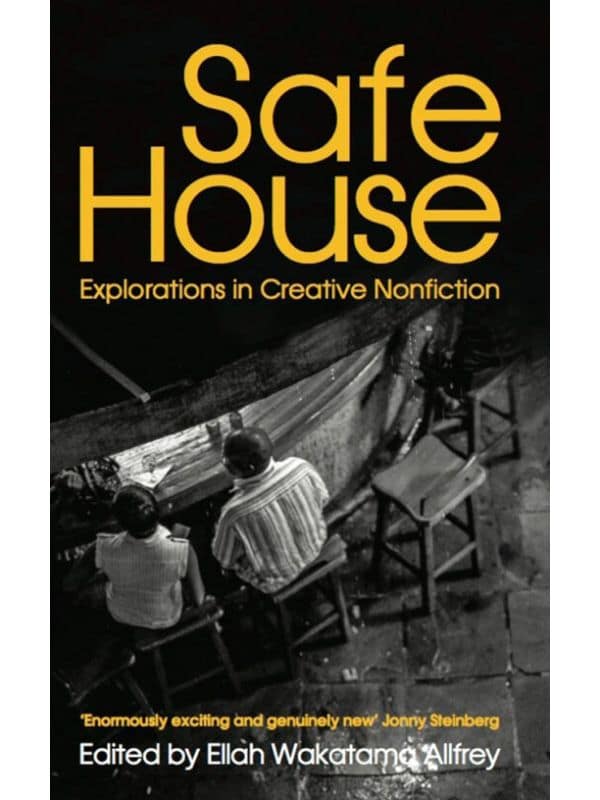
Safe House
£11.99 – £12.99Price range: £11.99 through £12.99
Fourteen writers enter the places where headlines stop and real human stories begin.
Safe House brings together powerful creative nonfiction from across Africa, moving from the Ebola crisis in Liberia and political exile in Uganda to LGBTQ rights, China’s growing influence and a haunting South African murder.
Edited by Ellah Wakatama Allfrey, this unforgettable collection blends memoir, reportage and travel writing to reveal a continent through the people living its most urgent stories.
Honest, intimate and thought provoking, it is essential reading for anyone seeking contemporary African experiences told from within.
Safe House: 14 Powerful True Stories from Africa
Fourteen writers enter the places where headlines stop and real human stories begin.
Safe House is a compelling collection of creative nonfiction edited by Ellah Wakatama Allfrey.
Through memoir, reportage, travel writing and personal essays, writers from across Africa explore some of the continent’s most urgent contemporary experiences.
The collection moves from the Ebola crisis in Liberia and political exile in Uganda to LGBTQ rights, migration, murder and China’s growing influence across Africa.
Each writer approaches a public issue through individual lives, transforming distant events into intimate and unforgettable human stories.
Africa Beyond the Headlines
African countries are frequently presented through statistics, political speeches and reports produced far from the people being discussed.
Safe House offers another way of seeing.
Its contributors write from personal experience, careful observation and direct encounters with the individuals at the centre of each story.
Large issues become immediate because readers see how they affect friendships, families, bodies and everyday decisions.
The result is a varied portrait of contemporary Africa that refuses to reduce an entire continent to one narrative.
Fourteen Distinctive African Voices
The anthology features writing by Hawa Jande Golakai, Kofi Akpabli, Kevin Eze, Isaac Otidi Amuke and Mark Gevisser.
Other contributors include Elnathan John, Bongani Kona, Msingi Sasis, Barbara Wanjala and Simone Haysom.
The collection also contains work by Sarita Ranchod, Beatrice Lamwaka, Neema Komba and Chike Frankie Edozien.
These writers come from Liberia, Ghana, Nigeria, Kenya, South Africa, Uganda and Tanzania.
Their different backgrounds ensure that Safe House does not speak about Africa with one voice.
Instead, the essays create a conversation between distinct countries, histories and personal experiences.
Inside Liberia’s Ebola Crisis
In “Fugee,” Liberian scientist and writer Hawa Jande Golakai documents the Ebola crisis from close range.
She writes about fear, public health and the suspicion faced by Liberians travelling during the outbreak.
Her scientific background provides insight into the disease, but the essay remains deeply personal.
Readers experience the emotional consequences of being treated as a possible source of infection simply because of nationality.
The account replaces abstract numbers with the voice of someone living through a public health emergency.
Political Exile and the Search for Safety
Kenyan writer Isaac Otidi Amuke reflects on political activism and exile in Kampala.
His story examines what it means to leave home because remaining has become dangerous.
Exile may offer physical protection, but it can also bring isolation, uncertainty and a painful distance from familiar communities.
The idea of a safe house therefore becomes more complicated.
Safety may be temporary, conditional or accompanied by losses that cannot easily be measured.
LGBTQ Lives and the Right to Belong
Mark Gevisser follows the experience of a young Ugandan seeking refuge in Kenya because of persecution connected to sexuality and gender.
The essay reveals the uncertainty faced by LGBTQ refugees who may escape one danger only to encounter another.
Legal processes, social hostility and financial insecurity make genuine safety difficult to achieve.
Safe House centres the individual behind the political debate.
The story asks what protection means when a person cannot return home but is never fully welcomed elsewhere.
China’s Growing Presence in Africa
Ghanaian writer Kofi Akpabli examines China’s increasing economic and cultural influence across the continent.
His perspective moves beyond simplistic arguments about whether that relationship is entirely beneficial or harmful.
Instead, the essay observes how global investment appears in local businesses, working relationships and changing communities.
Readers encounter the contradictions that emerge when opportunity, inequality and cultural difference meet.
This makes the collection valuable to anyone interested in contemporary African politics and international relations.
A Murder and the Stories Society Ignores
South African writer Bongani Kona investigates a disturbing story of family conflict and murder in a remote seaside community.
The victim’s unconventional lifestyle influences how others respond to her disappearance and death.
The essay examines prejudice, memory and the unequal attention given to different victims.
It asks whose lives society considers worthy of protection and whose suffering is easily dismissed.
Like the strongest pieces in Safe House, the story combines careful reporting with emotional and moral complexity.
Travel Writing with a Deeper Purpose
The travel writing in this collection is not limited to descriptions of landscapes or unfamiliar places.
Journeys become opportunities to investigate power, identity and human connection.
Writers cross borders to meet activists, communities and individuals living within rapidly changing political conditions.
Their movement also raises questions about who is free to travel and who is forced to leave home.
Every location carries history, memory and unequal access to safety.
Where Memoir Meets Reportage
Creative nonfiction combines factual accuracy with the narrative techniques associated with literature.
The writers use scenes, dialogue, character and reflection to make real experiences compelling without turning them into fiction.
Personal presence is not treated as a weakness.
Instead, contributors acknowledge how their backgrounds and emotions affect what they notice and understand.
Safe House demonstrates how literary storytelling can bring clarity and emotional depth to real events.
Stories About People at the Margins
Many of the essays focus on people whose lives are ignored, misunderstood or deliberately pushed from public view.
They include refugees, activists, political exiles, victims of violence and communities threatened by disease.
The collection does not present these individuals simply as helpless victims.
Readers encounter humour, determination, contradiction and the ability to make choices under difficult conditions.
This approach preserves dignity while exposing the systems that create vulnerability.
Why the Title Safe House Matters
A safe house is usually understood as a place of protection.
Throughout the collection, however, safety is never simple or guaranteed.
A new country may provide refuge while creating loneliness.
A family home may conceal conflict, while a familiar community may become dangerous for anyone considered different.
Safe House asks whether genuine security can exist without justice, acceptance and the freedom to live openly.
The title connects stories that otherwise move across very different countries and subjects.
Why You Should Read Safe House
- It contains 14 essays by writers from across Africa.
- It combines memoir, reportage, travel writing and cultural criticism.
- It offers a personal account of Liberia’s Ebola crisis.
- It examines political exile, migration and the search for safety.
- It explores LGBTQ rights and refugee experiences in East Africa.
- It investigates murder, prejudice and overlooked victims.
- It considers China’s growing economic influence across Africa.
- It centres African writers as interpreters of their own societies.
Who Will Enjoy This Collection?
Safe House is ideal for readers of African nonfiction, literary journalism, memoir and contemporary social history.
It will appeal to anyone interested in politics, public health, human rights, migration and LGBTQ experiences in Africa.
The anthology is also an excellent choice for book clubs and university courses exploring African studies, journalism and creative nonfiction.
Writers and students can learn from the different ways contributors transform research and lived experience into compelling narrative.
Edited by Ellah Wakatama Allfrey
Ellah Wakatama Allfrey is a Zimbabwean born editor, critic and influential figure in international publishing.
She previously served as deputy editor of Granta and has held senior editorial positions at major publishing houses.
Her experience allows the anthology to balance a wide range of subjects while maintaining a clear commitment to distinctive African voices.
Explore more about her editorial work on Cassava Republic’s Ellah Wakatama Allfrey author page.
Explore More Writing from the Contributors
Readers moved by Hawa Jande Golakai’s account of the Ebola crisis can discover her crime novel The Lazarus Effect.
Continue with The Score, another gripping novel featuring investigative journalist Vee Johnson.
Discover more essays, histories and personal narratives in Cassava Republic’s African and Black Nonfiction collection.
Learn More About the Project
Read about the book’s development, 14 contributors and partnership with Commonwealth Writers on the Commonwealth Foundation project page.
The project was created to find and amplify less frequently heard voices from across the African continent.
Order Safe House Today
Safe House is an urgent and humane collection that brings readers closer to the people behind some of Africa’s most important contemporary stories.
Its essays challenge assumptions, cross borders and reveal how political events enter ordinary lives.
Order your copy today and encounter 14 unforgettable works of African creative nonfiction.
| Weight | 0.5 kg |
|---|---|
| Dimensions | 60.0 × 0.4 × 6.0 cm |
| ISBN | 9781911115168 |
| Book Author | |
| Book Type | EPUB, Kindle, PDF, Paper Back |
| year_publication | 2016 |
Reviews
There are no reviews yet.