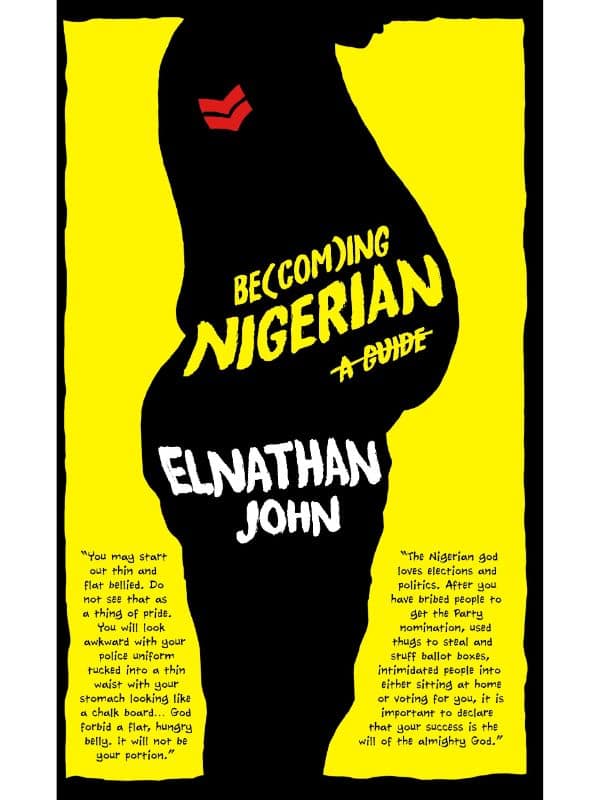
Be(com)ing Nigerian: A Guide
₦9,000.00 – ₦12,000.00Price range: ₦9,000.00 through ₦12,000.00
Do you want to survive Nigeria? First, learn when to pray, when to hustle and when to pretend you know somebody important.
Be(com)ing Nigerian: A Guide by Elnathan John is a fearless and wickedly funny examination of the politics, religion, business and everyday contradictions that shape Nigerian life.
From ambitious politicians and miracle selling pastors to police officers, writers, drivers and professional hustlers, nobody escapes this sharp satirical mirror.
Hilarious, provocative and uncomfortably familiar, this is essential reading for Nigerians, members of the diaspora and anyone trying to understand how the country really works.
Be(com)ing Nigerian: A Guide to 10 Shocking National Truths
To survive Nigeria, you need faith, connections, confidence and a clear understanding that almost everything is negotiable.
Be(com)ing Nigerian: A Guide by Elnathan John is a sharp and outrageously funny examination of the people, institutions and contradictions that shape Nigerian life.
Written as a guide for Nigerians at home and abroad, the book explains how to navigate politics, religion, business, relationships and the national commitment to hustle.
Politicians promise transformation. Religious leaders promise miracles, while ordinary citizens find creative ways to survive systems that rarely work as expected.
Nobody escapes Elnathan John’s satirical attention. More importantly, no reader is allowed to laugh at everyone else without eventually recognising something familiar.
What Does It Mean to Become Nigerian?
Being Nigerian can mean belonging to a country filled with energy, humour and extraordinary adaptability.
It can also mean learning how to operate within institutions where written rules and actual practice are often completely different.
A Nigerian may complain passionately about corruption while searching for a connection who can help avoid an inconvenient procedure.
People condemn politicians, pastors and police officers, but they may repeat the same behaviour when given a smaller amount of power.
Be(com)ing Nigerian: A Guide explores these contradictions without presenting them as the failures of a few distant villains.
The book asks every reader to consider how individuals participate in the systems they criticise.
A Satirical Guide to the Nigerian Hustle
The hustle is one of the book’s most recognisable ideas. It represents the creativity and determination required to survive daily life.
When formal systems fail, people improvise. They create businesses, negotiate obstacles and develop unexpected methods for getting things done.
This adaptability is frequently celebrated as evidence of Nigerian resilience. Yet the constant need to hustle also reveals institutions that force citizens to solve problems privately.
A person without money, confidence or social connections can easily be left behind. Survival becomes easier for those who know how to perform influence.
Be(com)ing Nigerian: A Guide celebrates Nigerian ingenuity while questioning why so much ingenuity must be spent overcoming preventable difficulties.
Politics as Performance
Nigerian politicians understand the importance of appearance. Campaign promises, public generosity and carefully staged humility help create the image of a leader who serves the people.
Once power is secured, those promises may become less urgent. Public office can be treated as an opportunity to distribute favours, reward supporters and prepare for the next election.
Elnathan John examines how political power is performed and protected. Language about service can conceal personal ambition and financial interest.
The satire also extends to voters. Citizens may condemn corrupt politicians while accepting gifts, money or promises during an election.
Through this uncomfortable humour, Be(com)ing Nigerian: A Guide demonstrates how political dysfunction survives through relationships between leaders and the people they govern.
Religion, Miracles and Money
Religion is deeply woven into Nigerian public and private life. Prayer appears in homes, businesses, political events and almost every important social occasion.
Faith can offer hope and community in a society where many people receive little protection from public institutions.
However, religion can also become a profitable performance. Spiritual authority gives some leaders access to money, influence and followers who are discouraged from asking difficult questions.
The book examines pastors, public morality and the commercial possibilities created by religious devotion.
Be(com)ing Nigerian: A Guide does not simply laugh at belief. It exposes what happens when religious language is used to protect wealth, hypocrisy or abuse.
The Nigerian Relationship with Power
Power is not limited to presidents, governors or wealthy business owners. It appears wherever one person can delay, frustrate or control another.
A police officer, government official, employer or family elder may use a small amount of authority as though it were absolute.
People with access to powerful connections receive different treatment. Those without connections may be expected to wait, plead or pay.
The book shows how Nigerians negotiate power in both public institutions and private relationships.
In Be(com)ing Nigerian: A Guide, corruption is not only the theft of enormous public funds. It includes everyday decisions that normalise unfairness.
Social Class and Knowing the Right Person
Nigerian society pays close attention to status. Clothing, cars, neighbourhoods, accents and professional titles can all communicate importance.
Appearing successful may provide access to opportunities unavailable to people assumed to be poor or unconnected.
This creates pressure to perform wealth even when genuine financial security is absent.
The right introduction can move an application, prevent an arrest or secure access to someone who would otherwise remain unavailable.
Elnathan John uses humour to reveal the inequality behind these interactions. The joke is funny because the experience is familiar, but the consequences are not equally harmless for everyone.
Love, Marriage and Unequal Expectations
The guide also turns its attention towards relationships. Romance may involve genuine affection, but it exists within expectations concerning money, gender and social respectability.
Men and women are judged according to different standards. Behaviour celebrated as confidence in one person may be condemned as arrogance or immorality in another.
Marriage can become a public achievement rather than a private relationship. Families, churches and communities may place greater value on appearing settled than on emotional wellbeing.
Be(com)ing Nigerian: A Guide exposes these inequalities through jokes that remain close to painful realities.
The book invites readers to question the traditions they defend and the people expected to carry the cost of those traditions.
Nigerians at Home and Abroad
Nigerian identity does not disappear when a person leaves the country. It changes in response to migration, racism, opportunity and distance from home.
Members of the diaspora may criticise Nigeria while remaining deeply invested in its politics, families and cultural life.
They may also romanticise home from a safe distance or return with advice that ignores the daily realities faced by residents.
At the same time, Nigerians at home can view the diaspora through assumptions about wealth and success.
Be(com)ing Nigerian: A Guide makes space for these tensions while recognising the strong connections linking Nigerians across borders.
A Book That Makes Everyone Uncomfortable
Good satire does more than produce laughter. It exaggerates familiar behaviour until its contradictions become impossible to ignore.
Elnathan John writes with the confidence of someone who understands the culture he is criticising and knows he is also part of it.
The book does not divide Nigeria into innocent citizens and corrupt leaders. It shows how similar attitudes towards power can appear at every level of society.
This is why the humour can feel uncomfortably personal. Readers may recognise relatives, colleagues, religious leaders and themselves.
Behind every joke in Be(com)ing Nigerian: A Guide is a serious question about what must change and who is responsible for changing it.
Accessible Nigerian Social Commentary
The book uses the structure and voice of a practical manual. It appears to offer instructions for becoming a successful Nigerian.
This format makes complex political and social issues entertaining and easy to approach.
Readers do not need specialist knowledge of political theory. Familiar situations demonstrate how power operates in everyday life.
The short sections also make the book suitable for readers who enjoy sharp observations rather than long academic arguments.
Although the humour is distinctly Nigerian, many themes have broader relevance. Political hypocrisy, religious exploitation and social inequality exist far beyond one country.
Why Read Be(com)ing Nigerian: A Guide?
- It offers sharp and entertaining Nigerian political satire.
- It examines religion, business, politics and everyday survival.
- It explores corruption beyond politicians and public institutions.
- It reveals how power is performed in homes and relationships.
- It considers Nigerian identity both at home and abroad.
- It combines serious social criticism with memorable humour.
- It is accessible to Nigerians and readers unfamiliar with the country.
- It encourages reflection without becoming an academic lecture.
- It was selected for the World Economic Forum Book Club.
- It makes an excellent gift for lovers of Nigerian humour.
Be(com)ing Nigerian: A Guide is ideal for readers of political satire, African social commentary, Nigerian humour and books about contemporary African identity.
It is also an excellent choice for book clubs, university courses and diaspora communities discussing politics, religion, power, culture or national identity.
About Elnathan John
Elnathan John is a Nigerian novelist, lawyer, cartoonist and satirist. His writing examines politics, religion, identity and the ways power operates within ordinary life.
He has twice been shortlisted for the Caine Prize for African Writing.
His novel Born on a Tuesday won the Betty Trask Award and was shortlisted for the Nigeria Prize for Literature.
John’s humour is sharp, but it is grounded in serious observation. He uses satire to reveal the contradictions people learn to accept as normal.
Read More Books by Elnathan John
Explore Born on a Tuesday, his acclaimed novel about friendship, faith and political extremism in northern Nigeria.
You can also read On Ajayi Crowther Street, his graphic novel with illustrator Alaba Onajin about family secrets, religious hypocrisy and hidden lives in Lagos.
Read an extract from Be(com)ing Nigerian: A Guide through the World Economic Forum Book Club.
Are You Ready to Become Nigerian?
Be(com)ing Nigerian: A Guide is hilarious because its situations are recognisable. It is provocative because the habits being mocked have serious consequences.
The book invites Nigerians to laugh at the country, laugh at one another and then look more carefully at themselves.
Order Be(com)ing Nigerian: A Guide today and discover the unofficial rules of politics, prayer, power and survival in Africa’s most spirited nation.
| Weight | 0.5 kg |
|---|---|
| Dimensions | 60.0 × 0.4 × 6.0 cm |
| ISBN-10 | 9781911115960, 9781911115977 |
| Book Author | |
| Book Type | Paperback |
| Pages | 160 |
Reviews
There are no reviews yet.