
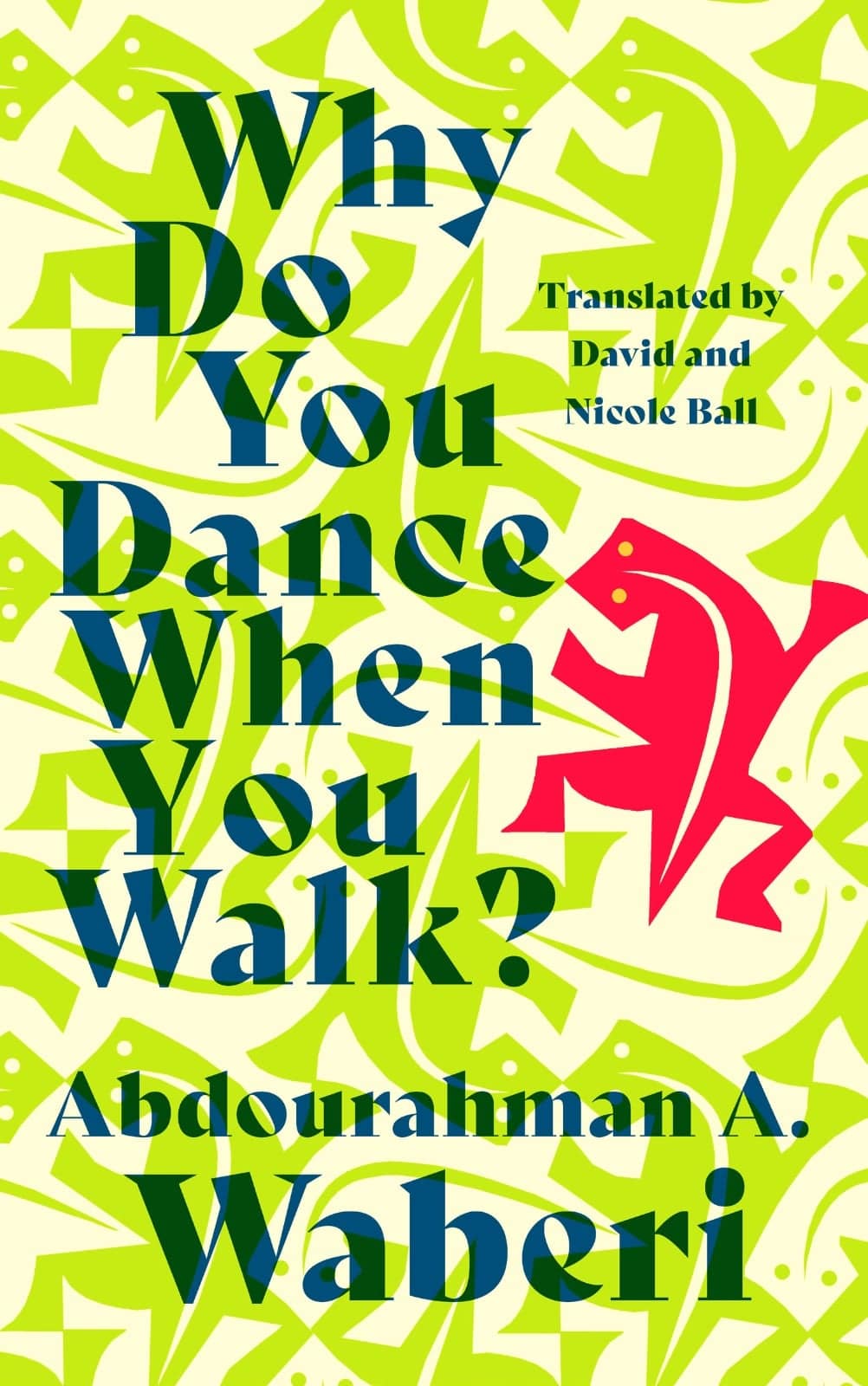
Why Do You Dance When You Walk
₦11,000.00
“Papa, why do you dance when you walk?”
A child’s innocent question opens the door to a lifetime of buried memories.
In Why Do You Dance When You Walk, Abdourahman A. Waberi takes readers from a morning walk in Paris to his childhood in Djibouti, where illness changed his body but never defeated his imagination. Tender, poetic and quietly powerful, this is an unforgettable story about disability, family, colonialism and a lonely boy who found freedom in books.
A moving reminder that the stories behind our differences are often the stories that make us who we are.
Why Do You Dance When You Walk: One Powerful Journey into Memory
One morning in Paris, a young girl notices the unusual rhythm of her father’s walk and asks a simple question: “Papa, why do you dance when you walk?”
Her question is innocent, loving and completely serious. Why does her father limp? Why can he not ride a bicycle or scooter like other people?
For her father, Aden, the answer cannot be explained in a single sentence. It requires a journey into his childhood, his family and a country that continues to live inside him.
Why Do You Dance When You Walk by Abdourahman A. Waberi is a tender autobiographical novel about disability, memory and the stories parents eventually choose to share with their children. Moving between present day Paris and Djibouti during the years preceding independence, the novel transforms a father’s physical difference into a moving account of survival and self discovery.
A Daughter’s Question and a Father’s Hidden Story
Aden’s daughter, Béa, does not ask her question with cruelty. She asks because she loves her father and wants to understand him.
Unable to resist her curiosity, Aden begins to describe the world of his childhood. He recalls the intense heat, shifting desert, dusty streets and modest roofs of his neighbourhood. He remembers his silent and mysterious mother, members of his extended family and the many people who influenced his early life.
At the centre of these memories is the illness that affected his leg and changed the way he moved through the world. The physical consequences remained with him, but so did the emotional effects of being considered different.
As Aden tells his story, his daughter begins to see that the movement she describes as a dance contains pain, history, courage and years of determination.
Growing Up with Disability in Djibouti
Why Do You Dance When You Walk offers an intimate portrayal of a boy growing up with a disability in an environment where medical support is limited and difference can attract unwanted attention.
Aden must endure illness, loneliness and the cruelty of people who do not understand his body. He learns how quickly a physical condition can influence the way others define a person.
However, the novel does not reduce him to his disability. He is observant, intelligent, curious and capable of finding beauty in a difficult world. His experiences shape him, but they do not represent the full measure of who he becomes.
This makes the book an important choice for readers searching for an African novel about disability. Waberi writes about the body with honesty while preserving the dignity, humour and complexity of his central character.
Finding Freedom Through Books and Language
During periods of sickness and isolation, Aden discovers comfort in books. Reading gives him access to possibilities beyond the boundaries of his neighbourhood and the limitations other people attempt to place upon him.
Stories become companions. Poetry offers beauty. Language gives him a way to understand himself and eventually communicate his experiences to his daughter.
The boy who sometimes feels alone begins to imagine a larger future. His love of literature helps transform pain into creativity and memory into storytelling.
For readers who understand the life changing power of books, this element of Why Do You Dance When You Walk is especially moving. Literature does not erase Aden’s difficulties, but it gives him a different way to inhabit the world.
A Portrait of Djibouti Before Independence
Aden’s personal story unfolds against the history of Djibouti as it approaches independence from French colonial rule. The country is presented through a child’s observations of neighbourhood life, education, social difference and the presence of French expatriates.
Djibouti is not merely a background for the novel. Its sunlight, dust, heat, language and political uncertainty are woven into Aden’s identity.
The story reveals how colonialism enters daily life, influencing schools, opportunities and how people understand themselves. Yet Waberi keeps the historical material closely connected to the experiences of one family and one child.
This balance makes the novel accessible to readers interested in Djiboutian literature, colonial African history and translated African literature.
The Complexity of Family, Love and Memory
Family memories are rarely simple. Aden remembers affection, silence, absence, disappointment and moments of unexpected tenderness.
He revisits the people who raised him and the relationships that influenced the man he became. Some memories offer comfort, while others reveal wounds that have not entirely disappeared.
By speaking to Béa, Aden creates a bridge between generations. He gives his daughter a history she did not previously know and allows her to understand the person behind the familiar figure of her father.
Their conversation demonstrates how telling a personal story can become an act of trust. It also shows that children’s questions sometimes give adults permission to confront memories they have carried in silence.
Why Readers Will Connect with This Novel
- A tender and memorable relationship between a father and daughter
- An honest exploration of childhood disability and social difference
- A vivid portrait of Djibouti before independence
- A powerful account of the comfort and freedom found in books
- Beautiful writing that balances sorrow with warmth and humour
- Important themes of family, identity, resilience and belonging
- A concise novel suitable for individual reading and book club discussions
Why Do You Dance When You Walk will appeal to readers of literary fiction, autobiographical novels, African history and stories about people learning to understand their bodies and their past.
It is also an excellent book club selection. Readers can discuss disability, colonial education, family silence, childhood trauma and the relationship between memory and storytelling.
An Acclaimed Work of Translated African Literature
Originally written in French, the novel was translated into English by David Ball and Nicole Ball. The translation received support through a 2021 English PEN Translates Award.
Abdourahman A. Waberi is an acclaimed Djiboutian novelist, poet and essayist whose work frequently explores migration, memory, colonialism and his homeland. This novel is among his most personal works, drawing closely on his experiences of childhood illness and growing up in Djibouti.
Readers can explore an extract and learn more about its English PEN recognition through the Johannesburg Review of Books.
Discover More Translated African Books
Explore more stories carried across languages in Cassava Republic’s translated African literature collection.
You may also enjoy The Mercy Step, another moving Cassava Republic novel that explores family, memory, emotional survival and the experiences that shape a person’s life.
Order Why Do You Dance When You Walk Today
Why Do You Dance When You Walk begins with one innocent question and unfolds into a moving meditation on the body, family and the memories we carry into adulthood.
Order your copy today and discover how one father turns pain into storytelling, difference into identity and an unusual walk into a dance of survival.
| ISBN-10 | 978-1913175320 |
|---|---|
| Book Author | |
| Book Type | |
| year_publication | 2022 |
| Pages | 124 |
Reviews
There are no reviews yet.