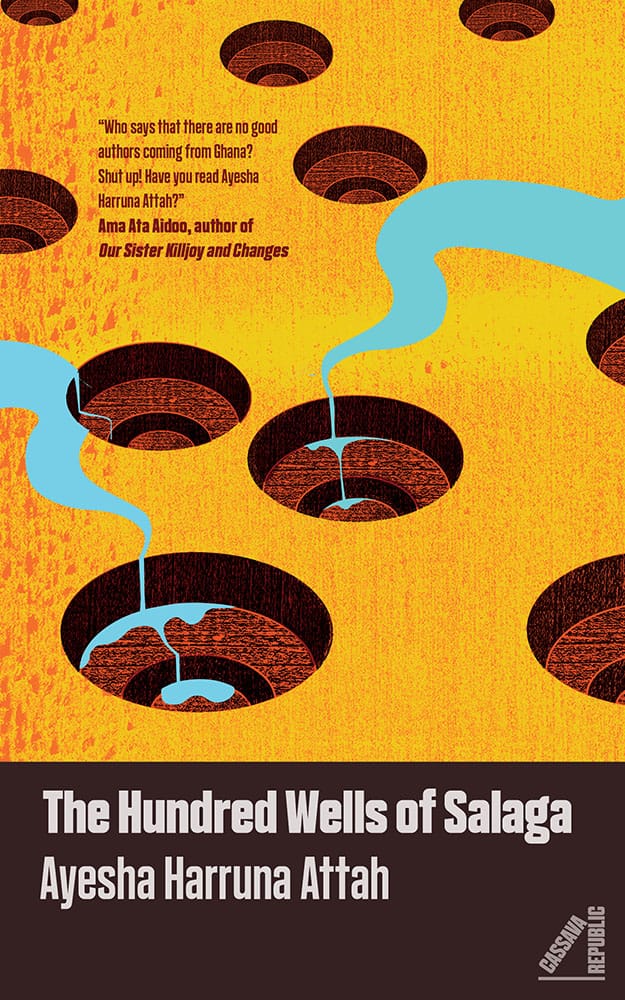
The Hundred Wells of Salaga
₦9,000.00 – ₦12,000.00Price range: ₦9,000.00 through ₦12,000.00
Two women. Two unequal paths. One turbulent moment that will change their lives forever.
The Hundred Wells of Salaga follows Aminah, a young woman torn from her home, and Wurche, the determined daughter of a chief who wants power and freedom on her own terms.
As their lives collide during the slave trade and European expansion in nineteenth century Ghana, both women must decide what survival, loyalty and freedom truly mean.
Powerful, intimate and inspired by history, Ayesha Harruna Attah’s unforgettable novel is perfect for readers of African historical fiction and compelling stories about courageous women.
The Hundred Wells of Salaga: Two Powerful Women and One Unforgettable Story
Two women are born into different worlds. One wants the freedom to shape her future. The other must fight to reclaim a future stolen from her.
The Hundred Wells of Salaga by Ayesha Harruna Attah is a powerful work of African historical fiction set in nineteenth century Ghana.
Inspired by real events, the novel follows Aminah and Wurche as slavery, political conflict and European expansion transform their lives.
Their journeys begin separately. When their paths finally meet, each woman is forced to reconsider power, loyalty and freedom.
Meet Aminah and Wurche
Aminah begins life in Botu, where she dreams of adventure, love and a future beyond the boundaries of her community.
Those dreams are shattered when raiders attack her home. Separated from her family, she is forced onto a dangerous journey towards Salaga.
Fear and uncertainty replace the security she once knew. Yet Aminah gradually develops the strength needed to survive an unfamiliar and violent world.
Wurche is the wilful daughter of a chief. Intelligent and politically ambitious, she wants to participate in the decisions shaping her people.
Her father values her ability but remains bound by expectations about what a woman should be. Wurche must therefore negotiate for influence within a society that limits her freedom.
The Hundred Wells of Salaga brings these two women together at a moment when political rivalry, commerce and foreign ambition are changing West Africa.
A Historical Novel Set in Precolonial Ghana
The novel takes readers into Salaga, an important commercial centre located in what is now northern Ghana.
Traders, political leaders, enslaved people and foreign powers pass through the city. Wealth and opportunity exist beside exploitation and human suffering.
Ayesha Harruna Attah presents this history through the experiences of ordinary people rather than treating it as a distant sequence of dates and battles.
Readers encounter homes, markets, royal compounds and busy trade routes. They also see how major historical changes enter private relationships and everyday decisions.
This detailed setting makes The Hundred Wells of Salaga an absorbing choice for readers seeking historical fiction set in Ghana.
An African Perspective on Slavery
Many novels about slavery concentrate primarily on the journey across the Atlantic or life after arrival in the Americas.
This story turns towards the African societies affected by capture, trade and political conflict before that crossing took place.
It examines how African rulers, merchants and communities became connected to systems of enslavement. It also explores the growing influence of European powers during the scramble for Africa.
The novel does not present history as a simple conflict between innocent and guilty groups. Instead, it reveals difficult relationships between power, wealth, responsibility and survival.
Through Aminah and Wurche, The Hundred Wells of Salaga gives this history an intimate human dimension.
Two Women Searching for Freedom
Aminah and Wurche occupy very different positions in society.
Aminah has been robbed of control over her life. Her struggle begins with surviving the journey forced upon her and finding ways to preserve her identity.
Wurche has privilege and proximity to political power. However, her gender prevents her from exercising that power as freely as the men around her.
One woman is fighting against captivity. The other is fighting against the restrictions attached to her position.
Their experiences are not equal, but both reveal how women navigate systems created to control them.
This contrast gives the novel its emotional and moral complexity.
Power, Complicity and Difficult Choices
There are no easy decisions in this story.
Wurche wants to influence her father’s court, but political participation brings compromise. Her desire for power may connect her to systems that deny other people their freedom.
Aminah must learn when to resist, when to wait and whom she can trust. Even moments of apparent safety can conceal new forms of control.
The Hundred Wells of Salaga asks what freedom means when every available choice carries a cost.
It also considers whether people can recognise their involvement in injustice and choose a different path.
Love, Friendship and Human Connection
Although the novel confronts violence and oppression, it is not defined only by suffering.
Love, friendship and desire remain important to both women. These connections offer comfort, but they also create vulnerability.
Aminah’s relationships help her preserve a sense of self. Wurche’s attachments reveal the tension between personal desire and political duty.
The friendship that develops between the women is shaped by their unequal circumstances. Trust cannot grow without confronting the power separating them.
Ayesha Harruna Attah handles this relationship with sensitivity rather than offering an easy version of reconciliation.
History Inspired by a Family Story
The inspiration behind The Hundred Wells of Salaga is deeply personal.
Ayesha Harruna Attah drew upon family history, including the story of an ancestor who was brought into the family through the slave trade.
The novel transforms that fragment of history into a broader investigation of memory, responsibility and the stories families inherit.
This personal connection gives the narrative emotional force while opening a larger conversation about West African history.
Why You Should Read The Hundred Wells of Salaga
- It tells Ghanaian history through two compelling female perspectives.
- It explores slavery from within nineteenth century West Africa.
- It combines political conflict with intimate human relationships.
- It features courageous but morally complicated women.
- It examines freedom, power, loyalty and personal responsibility.
- It brings precolonial Salaga vividly to life.
- It is inspired by historical events and the author’s family history.
- It offers an absorbing alternative to familiar slavery narratives.
Who Will Enjoy This Novel?
The Hundred Wells of Salaga is ideal for readers of African historical fiction, Ghanaian literature and novels about slavery and colonialism.
It will also appeal to readers who enjoy strong female protagonists, morally complex characters and stories about women resisting social expectations.
The novel is an excellent choice for book clubs and courses exploring African history, women’s studies, slavery, colonialism and historical memory.
Readers interested in character driven historical fiction will find much to discuss in Aminah and Wurche’s intersecting lives.
About Ayesha Harruna Attah
Ayesha Harruna Attah is a Ghanaian novelist whose writing explores history, identity, family and the lives of African women.
Her storytelling combines careful historical research with emotionally vivid characters and intimate human relationships.
She is also the author of The Deep Blue Between, which follows Hassana and Husseina after their appearance in this novel.
Explore more work by the author through Cassava Republic’s Ayesha Harruna Attah collection.
Discover the Story Behind Salaga
Readers can learn more about the novel’s historical setting through the Historical Novel Society’s exploration of the book and Salaga’s history.
This additional context reveals how political struggles, the slave trade and European intervention shaped the world in which the two women live.
Order The Hundred Wells of Salaga Today
The Hundred Wells of Salaga is a moving story of two women confronting the forces attempting to determine their worth and control their futures.
Rich in history and alive with emotional tension, it asks difficult questions about freedom, responsibility and the price of power.
Order your copy today and enter the unforgettable world of Aminah, Wurche and nineteenth century Ghana.
| Weight | 0.5 kg |
|---|---|
| Dimensions | 60.0 × 0.4 cm |
| ISBN-10 | 978-1911115519 |
| Book Author | |
| Book Type | Paperback, EPUB, PDF, Kindle |
| year_publication | 2018 |
| Pages | 234 |
Reviews
There are no reviews yet.