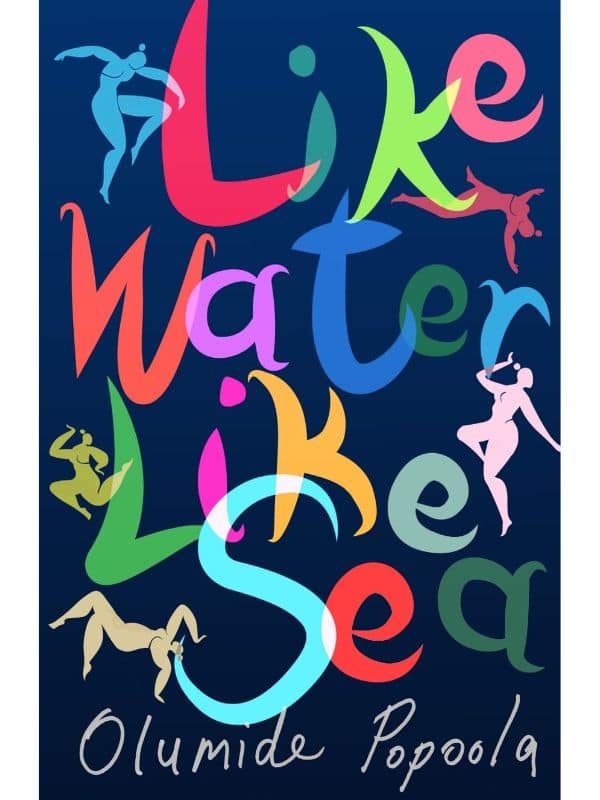
Like Water Like Sea
₦16,000.00
Why is Nia floating fully clothed in a London river on the tenth anniversary of her sister’s death?
Like Water Like Sea by Olumide Popoola follows a queer woman caught between unresolved grief, complicated desire, an unforgettable first love and a mother living with bipolar disorder.
Tender, seductive and emotionally fearless, this powerful novel explores sexuality, motherhood, friendship and the many ways we fall apart before becoming whole. Perfect for readers who want Black queer fiction with heart, complexity and characters who linger long after the final page.
 Like Water Like Sea by Olumide Popoola
Nia is floating fully clothed in a London river. It is the tenth anniversary of her sister’s death, and the grief she has carried for years is becoming impossible to contain.
Sometimes we swim. Sometimes we float. Other times, we are drowning. The hardest part is knowing which one is happening.
Like Water Like Sea is a tender, seductive and emotionally fearless novel about grief, queer love, mental health, motherhood and the difficult journey towards becoming whole.
Through Nia’s relationships with family, friends and lovers, Olumide Popoola asks whether falling apart can sometimes be the beginning of understanding who we truly are.
Ten years of unresolved grief
Nia’s older sister, Johari, died ten years ago, but the emotional consequences of that loss continue to shape her life.
The anniversary brings memories and questions that Nia has never fully confronted. Her grief is not simple or orderly. It affects how she understands love, how she responds to intimacy and how much of herself she is prepared to reveal to other people.
Johari’s absence is felt throughout the family. Each person carries the loss differently, creating tensions between what they feel and what they believe they should feel.
Rather than presenting grief as something that can be completed or overcome, the novel explores how people learn to live alongside it. Loss changes shape over time, much like water, but it never disappears completely.
A life shaped by complicated relationships
Around Nia is a compelling circle of people who make her life richer, more confusing and more difficult to resist.
There is Temi, intelligent, confident and irresistibly attractive. There is Melvin, Nia’s teenage love, whose history with her family gives their relationship an emotional weight neither of them can easily escape.
Rahul and Crystal enter Nia’s life through a new but unexpectedly intimate friendship. Their connection opens possibilities that challenge conventional ideas about desire, commitment and family.
These relationships do not fit into neat categories. Passionate love, friendship, family loyalty and emotional dependence overlap, leaving Nia to decide what she needs and what she can genuinely offer in return.
Like Water Like Sea recognises that love can be healing and painful at the same time. It can hold people together, but it can also expose the parts of themselves they would rather hide.
A daughter and a mother
Looming over Nia’s emotional world is her mother, SuSu, whose experience of bipolar disorder has profoundly affected their family.
SuSu is not reduced to a diagnosis. She is a complicated woman with desires, humour, mistakes, strength and an enduring love for her children.
Through her story, the novel examines the pressures placed on mothers and the unrealistic belief that motherhood should make a woman endlessly capable of sacrifice and care.
Nia must confront both her love for SuSu and the pain created by their relationship. She must also separate the reality of her mother from the expectations, fears and guilt that have accumulated around her.
This compassionate portrayal of mental health and family life gives the story emotional depth without simplifying either woman.
Queer love without easy answers
This is a significant work of queer African literary fiction, but its characters are never treated as representatives of a single experience.
Nia’s sexuality is fluid, personal and connected to the way she forms relationships. The novel presents queer desire, nonbinary identity and unconventional family structures as ordinary parts of complex human lives.
It also understands that representation does not require perfect characters. Nia makes mistakes, feels jealousy, wants conflicting things and sometimes hurts the people she loves.
Her imperfections make her journey convincing. She is not searching for a perfect relationship. She is trying to understand how to love without losing herself.
Readers can discover more stories of love, resistance and identity in Cassava Republic’s Queer African and Black Literature collection.
Water, survival and transformation
Water runs through the novel as both a physical presence and an emotional metaphor.
It represents uncertainty, movement and the changing ways people experience love and grief. Water can hold a person, carry them forward or pull them beneath the surface.
The novel’s structure mirrors this fluidity. Its short sections move between perspectives, memories and different stages of Nia’s life. Readers encounter moments that feel like emotional snapshots, each revealing another part of the person she is becoming.
Across Like Water Like Sea, falling apart is not treated simply as failure. It can also be an honest response to pain and the beginning of transformation.
Read Ainehi Edoro’s thoughtful discussion of the book’s use of water, grief and vulnerability in this Brittle Paper review.
A story that unfolds across decades
Nia’s story stretches beyond a single crisis. The novel follows her through different stages of adulthood, allowing readers to see how love, friendship and self knowledge change over time.
The person Nia is in her late twenties is not the person she becomes in middle age. Relationships that once seemed permanent change, while unexpected connections create new ways of thinking about family and belonging.
This wider perspective gives the novel unusual emotional scope. It is not only about surviving one painful anniversary. It is about building a life while carrying everything that came before.
Why read Like Water Like Sea?
This powerful contemporary novel is ideal for readers who enjoy:
- Queer African and Black diaspora fiction
- Literary novels about grief and healing
- Complex stories about mothers and daughters
- Black queer women as central characters
- Thoughtful portrayals of mental health
- Unconventional love and chosen family
- Emotionally complicated friendships
- Character driven fiction set in London
- Stories about sexuality and self discoveryus
- Books that invite reflection and discussion
The novel is a strong choice for personal reading and book clubs, particularly groups interested in love, identity, family, mental health and the forms that healing can take.
Readers interested in the intersection of literature and emotional wellbeing can also explore Cassava Republic’s Mental Health Awareness collection.
What readers and writers are saying
Acclaimed writers have praised the novel for its heart, vibrant characters and exploration of love in its many forms.
Chinelo Okparanta highlights its emotional warmth and compelling cast. Yewande Omotoso describes its examination of love and desire as surprising, seductive and satisfying.
Troy Onyango recognises the novel as an important addition to the queer African literary canon, while Judith Bryan praises its subtle treatment of passionate, platonic and familial love.
These responses reflect the book’s greatest strength: it refuses to treat love as one simple emotion. Love appears as desire, friendship, responsibility, memory, conflict and the courage to remain present when another person is falling apart.
About Olumide Popoola
Olumide Popoola is a London based Nigerian German writer, speaker and creative writing lecturer.
Her publications include essays, poetry, the novella this is not about sadness, the play Also by Mail and breach, a short story collection written with Annie Holmes.
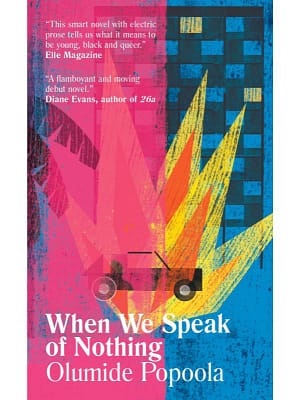
Her first full length novel, When We Speak of Nothing, explores Black queer life, friendship and belonging between London and Nigeria. Readers can discover it on the Cassava Republic website.
Popoola holds a PhD in Creative Writing and received the May Ayim Award for poetry. Her work frequently explores language, identity, migration, queerness and the ways people create community.
In Like Water Like Sea, she offers an intimate and unforgettable portrait of a woman learning that becoming whole does not always mean putting every broken piece back where it was.
Order Like Water Like Sea today and enter a moving story about grief, desire and the people who teach us how to keep swimming.
| ISBN-10 | 978-1913175627 |
|---|---|
| Book Author | |
| Book Type | |
| year_publication | 2024 |
| Pages | 272 |
Read alongside Like Water Like Sea