
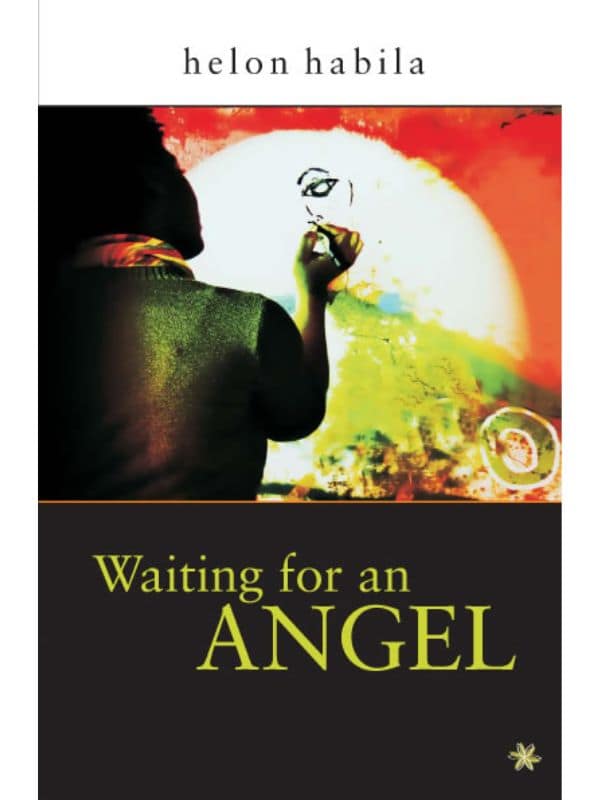
Waiting For An Angel
₦10,000.00
A journalist is imprisoned for telling the truth. In the darkness of his cell, words become his final act of resistance.
Waiting for an Angel by Helon Habila follows Lomba, a young Nigerian journalist arrested while covering a peaceful demonstration under military rule.
Through seven connected stories, his life becomes intertwined with the residents of Lagos’s Poverty Street, where ordinary people struggle against censorship, violence and fear.
Powerful, haunting and unexpectedly hopeful, this award winning novel asks what freedom means when speaking the truth could cost you everything.
Waiting for an Angel by Helon Habila
A journalist is imprisoned for telling the truth. In the darkness of his cell, words become his final form of freedom.
Lomba is a young Nigerian journalist and aspiring novelist living under military dictatorship.
After covering a peaceful demonstration, he is arrested and thrown into prison without a proper trial.
His world has been reduced to hunger, isolation and the cruelty of prison guards.
While the guards sleep, Lomba continues to write.
Waiting for an Angel by Helon Habila is a powerful novel about journalism, oppression and the courage required to resist silence.
Seven Powerful Stories in Waiting for an Angel
The novel unfolds through seven interconnected narratives.
Rather than following a simple chronological order, the story moves backwards and forwards through Lomba’s life.
Each section introduces another character affected by Nigeria’s political crisis.
The stories gradually connect, revealing how one dictatorship can enter prisons, newsrooms, universities, homes and relationships.
Lomba remains the central figure, but the novel is not only his story.
It is also the story of ordinary Nigerians trying to maintain hope when the government treats freedom as a threat.
This structure gives Waiting for an Angel the intensity of a novel and the variety of a short story collection.
Lomba: A Journalist Behind Bars
Lomba enters prison as a journalist, writer and political detainee.
He has not been convicted through a transparent legal process.
Instead, he waits indefinitely while the authorities attempt to erase him from public memory.
Writing becomes his only escape.
He records observations, memories and poems while hiding his work from the prison officers.
When a superintendent discovers Lomba’s poetry, he does not immediately punish him.
He asks Lomba to write love poems that can help him impress a woman.
The arrangement gives Lomba a small amount of protection.
It also creates a darkly humorous relationship between a prisoner and one of the men controlling his freedom.
Journalism Under Military Dictatorship
Waiting for an Angel presents journalism as both a profession and a dangerous public responsibility.
Reporters work under surveillance, censorship and the constant possibility of arrest.
Newspapers must decide whether to publish the truth or protect their staff from retaliation.
Lomba understands that words can challenge authority.
He also learns that writing the truth does not guarantee immediate justice.
A journalist may expose wrongdoing and still be silenced before the public can respond.
The novel honours writers who continue documenting events even when their names may disappear from the official record.
Life on Poverty Street in Lagos
Before his imprisonment, Lomba lives among the residents of Poverty Street in Lagos.
The neighbourhood is crowded, energetic and burdened by neglect.
Its residents struggle with unemployment, rising prices, poor services and political intimidation.
Despite these hardships, Poverty Street is not presented as a place without joy.
People form friendships, fall in love, argue, dream and search for opportunities.
They use humour to survive circumstances that might otherwise become unbearable.
Through their lives, Waiting for an Angel shows how national politics affects ordinary daily decisions.
Protest, Violence and the Cost of Resistance
The residents of Poverty Street eventually organise a demonstration.
The protest is a response to worsening conditions and years of government neglect.
For many residents, joining the demonstration is an act of hope.
It is a chance to demand recognition from leaders who have ignored them.
The government’s response is violent.
Security forces use fear and force to break the protest.
People are injured, lives are lost and the community is left carrying the consequences.
Lomba’s decision to cover the demonstration leads directly to his imprisonment.
Waiting for an Angel and Nigeria’s Abacha Era
The novel is set against the military rule associated with General Sani Abacha.
This was a period marked by political detention, censorship and attacks on critics of the government.
However, Helon Habila does not present history as a collection of dates and official speeches.
He shows how dictatorship feels to the people living beneath it.
Fear becomes part of daily life.
Citizens learn to watch what they say, whom they trust and where they gather.
Waiting for an Angel captures the emotional uncertainty created when laws no longer protect the people they are supposed to serve.
Love and Hope in a Time of Fear
The novel contains imprisonment, violence and political disappointment.
It is also filled with love, friendship, humour and creative ambition.
Lomba wants to become a novelist.
He forms relationships and imagines a future beyond the restrictions surrounding him.
Other characters also search for reasons to continue.
Their hope is not simple optimism.
It is the decision to remain human when a political system attempts to reduce people to numbers, suspects or prisoners.
The Meaning Behind the Title
The angel in the title carries several possible meanings.
It can represent rescue, freedom, death or the possibility of change.
The characters are waiting for something to interrupt their suffering.
Some wait for political freedom. Others wait for love, justice or an opportunity to escape.
The title also captures the uncertainty of life under dictatorship.
No one knows whether the approaching angel will bring deliverance or death.
This uncertainty follows the reader throughout Waiting for an Angel.
Award Winning Nigerian Literary Fiction
The novel won the 2003 Commonwealth Writers’ Prize for Best First Book in the Africa Region.
One of its stories, “Love Poems,” won the 2001 Caine Prize for African Writing.
This distinction is important because the Caine Prize was awarded to the individual story rather than the complete novel.
The recognition established Helon Habila as an important voice in contemporary African literature.
Learn more about the author and his literary achievements through the official Windham Campbell Prizes profile of Helon Habila.
Why Read Waiting for an Angel?
- Seven interconnected stories with memorable characters
- A powerful portrayal of journalism under military rule
- A vivid picture of everyday life in Lagos
- An accessible introduction to Nigerian political fiction
- Strong themes of resistance, courage and freedom
- A complex protagonist who refuses to stop writing
- Moments of humour within a serious political story
- A Commonwealth Writers’ Prize winning novel
- The Caine Prize winning story “Love Poems”
- An excellent choice for book clubs and university courses
Who Will Enjoy This Novel?
Waiting for an Angel will appeal to readers of African literary fiction and Nigerian political history.
It is ideal for readers interested in journalism, human rights and freedom of expression.
Readers who enjoy interconnected stories will appreciate how the different narratives gradually form a complete picture.
The book is also suitable for discussions about dictatorship, political protest and the responsibility of writers.
Its concise structure makes it accessible without reducing the complexity of its themes.
Explore More Nigerian Political Fiction
Continue exploring Helon Habila’s work with Measuring Time, an epic Nigerian novel about history, family and ambition.
Readers interested in imprisonment and the lasting effects of political violence may also enjoy A Small Silence by Jumoke Verissimo.
For another literary portrait of Lagos, discover Every Day Is for the Thief by Teju Cole.
About Helon Habila
Helon Habila is a Nigerian novelist, poet and professor of creative writing.
He was born in Kaltungo, Gombe State, and studied at the University of Jos and the University of East Anglia.
His books include Measuring Time, Oil on Water and The Chibok Girls.
His fiction frequently explores political power, environmental injustice, memory and the lives of ordinary Nigerians.
Waiting for an Angel introduced international readers to his precise, compassionate and politically engaged storytelling.
Order Waiting for an Angel Today
This novel shows what happens when a government becomes afraid of journalists, artists and ordinary citizens.
It also shows why stories survive even when the people who write them are imprisoned.
Lomba’s struggle is a reminder that freedom begins with the refusal to accept silence.
Order Waiting for an Angel today and discover seven unforgettable stories of courage, oppression and resistance.
| Weight | 1.5 kg |
|---|---|
| Dimensions | 3 × 6 × 6.0 cm |
| Print ISBN | 978-9780805135 |
| Book Author | |
| Book Type | |
| year_publication | 2007 |
| Pages | 177 |
Reviews
There are no reviews yet.