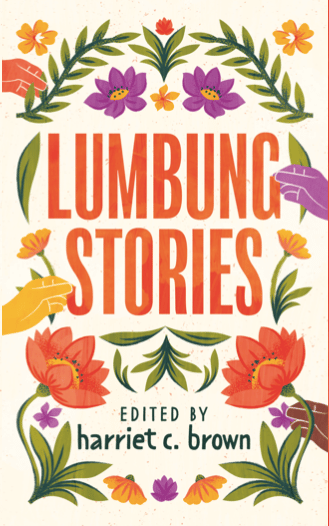
Lumbung Stories
£10.99
What if our future depends not on what we can keep, but on what we are willing to share?
Lumbung Stories brings together seven writers, seven languages and eight publishing houses in one extraordinary exploration of community. Moving between intimate fiction, speculative essays and experimental storytelling, this global anthology reimagines collective work through ideas such as lumbung, ubuntu, tequio, auzolan and mutirão.
Bold, surprising and deeply hopeful, this is a book for anyone who believes another way of living together is possible.
Lumbung Stories: Seven Powerful Voices and One Shared Future
What if the resources needed by a community belonged not to one person, but to everyone?
What if knowledge, food, creativity and opportunity could be gathered, protected and shared according to collective need?
Across the world, communities have developed different words for this practice. In Indonesia, there is lumbung. In South Africa, ubuntu. Mexico has tequio, the Basque Country has auzolan and Brazil has mutirão.
The languages are different, but each idea recognises a simple truth: people survive and flourish through cooperation.
Lumbung Stories is an ambitious international anthology that asks seven writers to imagine collective work, shared resources and community through fiction, speculative writing and experimental storytelling.
What Does Lumbung Mean?
The Indonesian word “lumbung” refers to a communal rice barn. Traditionally, members of a community store part of their harvest in a shared structure so that the resources can be distributed according to collectively agreed needs.
It is both a physical place and a way of thinking. The community builds resources together, protects them together and determines how they should be used.
The Indonesian art collective ruangrupa placed this principle at the centre of documenta fifteen, the major international exhibition held in Kassel, Germany, in 2022.
Rather than treating art as the work of isolated individuals, the project explored collaboration, sustainability, participation and fairer ways of sharing resources.
Lumbung Stories carries that principle into literature. Its production is itself an example of communal action, bringing together writers, translators, editors and publishers across languages and national boundaries.
Seven Writers from Different Parts of the World
The anthology contains new writing by Azhari Aiyub, Cristina Judar, Nesrine A. Khoury, Mithu Sanyal, Panashe Chigumadzi, Uxue Alberdi and Yásnaya Elena Aguilar Gil.
Each contributor begins from a different cultural and linguistic context. Instead of forcing the writers to adopt one definition of collective work, the collection allows each person to determine what a lumbung story might be.
The resulting texts move between intimate everyday experiences and large political questions. Some look towards the future. Others return to the past or examine the communal practices already embedded within ordinary life.
The writers explore how individuals relate to families, neighbourhoods, land, labour and inherited systems of power. Their different perspectives show that community is neither simple nor automatically harmonious.
Collective life requires negotiation, responsibility and a willingness to recognise needs beyond one’s own.
From Ubuntu to Tequio and Mutirão
A central strength of Lumbung Stories is its recognition that communities around the world have long practised forms of collective work.
Ubuntu is commonly associated with the understanding that a person becomes fully human through relationships with other people. Tequio describes organised community labour in parts of Mexico. Auzolan refers to neighbourhood work undertaken for the common benefit in the Basque Country.
Mutirão in Brazil represents people coming together to complete work that serves an individual or community. Other traditions explored in the collection include communal practices from Indonesia and Arabic speaking communities.
These concepts are not presented as identical. Each emerged from a specific history, language and cultural environment.
Bringing them together allows readers to recognise both their differences and their shared challenge to extreme individualism.
Stories That Cross Genres and Time
This is not a conventional collection in which every contribution follows the same literary form.
The writers move between speculative essays, experimental texts and intimate stories. Realism meets imagination. The past enters the present, while possible futures emerge from traditions that have existed for generations.
This formal variety makes the Lumbung Stories anthology particularly suitable for adventurous readers who enjoy literature that questions familiar boundaries.
One contribution may feel personal and immediate, while another may construct an imagined society or use an unconventional structure. Together, the works form a conversation about how literature can help readers envision different relationships between people and resources.
A Book Created Through Genuine Collaboration
The collection brings together eight publishing houses working across seven languages. Participating publishers produced editions for readers in English, German, Arabic, Indonesian, Portuguese, Spanish and Basque.
Cassava Republic Press published the English language edition, while other partners worked within their own publishing and cultural communities.
This structure means the book does not merely discuss collective work. The process through which it was created reflects the values being explored.
Editors, writers, translators and publishers shared knowledge and responsibility while ensuring that the anthology could travel across linguistic borders.
The project therefore offers a practical example of what publishing can become when collaboration is treated as a central value rather than a temporary arrangement.
Why This Collection Matters Today
Many societies are confronting economic inequality, political division, environmental crisis and increasing competition for resources.
These challenges raise urgent questions. How can people build systems that protect the vulnerable? What responsibilities do individuals have towards their communities? Can traditional practices help us imagine more sustainable futures?
Lumbung Stories does not provide one simple answer. Instead, it creates a space in which seven writers can approach these questions through narrative, memory and speculation.
The collection reminds readers that cooperation is not a new invention. Communities across the world already possess languages and practices for sharing labour, knowledge and resources.
What may be needed is the willingness to listen, adapt and recognise the value of ideas that dominant systems have often ignored.
Why Readers Will Be Drawn to Lumbung Stories
- Seven distinctive writers from different cultural backgrounds
- Stories originally created in seven languages
- A collaboration involving eight international publishers
- Fiction, speculative essays and experimental literary forms
- Global perspectives on community and collective action
- Ideas including lumbung, ubuntu, tequio, auzolan and mutirão
- A literary project connected to documenta fifteen
- A hopeful challenge to individualism and unequal resource distribution
This collection will appeal to readers of contemporary world literature, experimental fiction, speculative writing and books about cooperation or the common good.
It is also suitable for book clubs and university courses examining literature, art, community development, sustainability, postcolonial thought and global cultural exchange.
About harriet c. brown
The editor’s name, harriet c. brown, represents a collective entity formed by consonni and participating members of the documenta fifteen artistic team.
The collective identity reflects the book’s philosophy. Rather than assigning the editorial work to one visible individual, it acknowledges the many people and forms of labour involved in creating the project.
This approach turns the editor into a shared literary body and reinforces the anthology’s central argument that cultural production is never truly the work of one person alone.
Explore the Lumbung Project
Learn more about the ideas, international publishers and seven contributors through the official documenta fifteen Lumbung Stories project page.
You can also read Cassava Republic’s article on the essence of community in Lumbung Stories.
Discover more diverse collections in Cassava Republic’s African and international short stories collection.
Order Lumbung Stories Today
Lumbung Stories is a bold reminder that another way of living, creating and sharing is possible.
Order your copy today and discover how seven writers use global traditions of collective work to imagine stronger communities and a more generous shared future.
| Weight | 0.5 kg |
|---|---|
| ISBN-10 | 978-1913175542 |
| Edited By | Harriet Brown |
| Book Type | |
| year_publication | 2022 |
| Pages | 256 |
Reviews
There are no reviews yet.