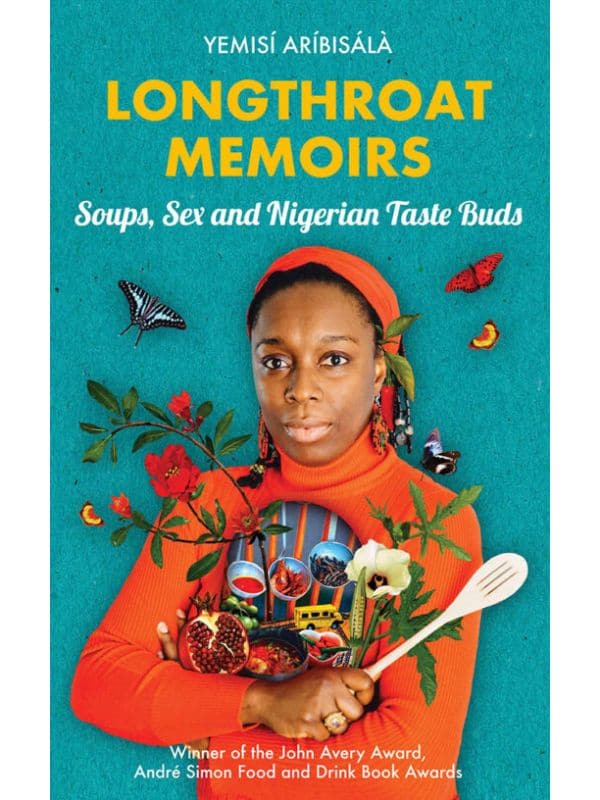
Longthroat Memoirs
Price range: ₦12,000.00 through ₦14,000.00
Longthroat Memoirs: A Delicious Journey Through Nigerian Food
This is not simply a book about Nigerian food. It is an invitation to taste an entire culture.
In Longthroat Memoirs, Yemisi Aribisala transforms soups, yams, fish, snails and everyday meals into vivid stories about memory, identity, politics and desire.
Each essay begins with food but refuses to remain inside the kitchen.
A familiar dish becomes a way to examine family, religion, gender, ethnicity and the complicated experience of being Nigerian.
Fearless, witty and sensuous, this acclaimed Nigerian food memoir offers something richer than a conventional cookbook.
Love Letters to the Nigerian Palate
Nigerian cuisine contains centuries of knowledge, creativity and cultural memory.
Recipes are carried between generations, adapted across regions and shaped by the people who prepare them.
Longthroat Memoirs treats these dishes with the seriousness and affection they deserve.
Yemisi Aribisala writes about the cultural history of soup, the seductive power of yam and the sensual allure of snails.
She considers fish as food, symbol and aphrodisiac. She explores the texture of okra and the careful processes behind beloved Nigerian soups.
Her writing captures not only how Nigerian food tastes, but also how it feels, smells and lives within memory.
More Than a Nigerian Cookbook
This is not a collection of recipes arranged around ingredients and cooking times.
It is a literary exploration of why food matters and what meals reveal about the people who prepare, serve and consume them.
Aribisala examines the emotions, assumptions and social rules hidden inside everyday eating.
A pot of soup may carry family history. A plate of food may reveal generosity, rivalry, status, intimacy or exclusion.
Longthroat Memoirs shows that Nigerian cuisine is never only about satisfying hunger.
Food becomes a language through which people express love, power, pride and belonging.
The Stories Behind Nigerian Food
Every Nigerian dish has a story, although that story may change depending on who is telling it.
Ingredients move across communities. Techniques are borrowed, protected, reinvented and occasionally argued over.
Aribisala approaches these conversations with curiosity and confidence.
She resists the tendency to treat Nigerian food as one uniform cuisine. Instead, she pays attention to regional differences and the personalities of individual dishes.
The essays celebrate the meticulous labour involved in making food properly.
They also question who receives recognition for that labour and whose knowledge is treated as valuable.
Food, Memory and Identity
Taste can return a person to childhood more quickly than almost anything else.
A particular aroma may recall a relative, a celebration, a disappointment or a kitchen that no longer exists.
In Longthroat Memoirs, these memories open into wider reflections on home and identity.
Food becomes a record of where people have lived, what they have lost and which traditions they have chosen to preserve.
The essays reveal how appetite connects the personal to the national.
To remember a meal is sometimes to remember an entire period of Nigerian life.
The Politics of What We Eat
Food may look ordinary, but it is closely connected to money, labour and social power.
Who cooks? Who eats first? Which ingredients are considered prestigious? Whose cuisine is presented as representative of Nigeria?
Aribisala approaches these questions without turning the book into a dry academic argument.
Her observations are lively, intimate and frequently funny.
Longthroat Memoirs explores cultural politics through the meals people recognise, desire and debate.
The result is accessible to general readers while offering rich material for anyone studying Nigerian culture, gender or food history.
Desire, Sensuality and the Body
Eating is a physical experience, and this collection refuses to pretend otherwise.
Aribisala writes openly about appetite, pleasure and the relationship between food and desire.
Texture, heat and flavour are described with language that makes each dish feel present on the page.
Fish, eggs, snails and soup become part of a playful but thoughtful conversation about sensuality.
The writing is confident rather than embarrassed by pleasure.
This gives Longthroat Memoirs its distinctive combination of intelligence, intimacy and irresistible energy.
Humour with a Sharp Edge
Yemisi Aribisala is an entertaining guide because she is willing to be opinionated.
She can celebrate a dish while questioning the beliefs surrounding it.
Her humour draws readers into discussions that might otherwise feel difficult or uncomfortable.
The essays move naturally between affection and criticism.
This balance allows the book to honour Nigerian food without treating culture as something too sacred to examine honestly.
A Major Work of African Food Writing
African cuisines have often been misrepresented, simplified or excluded from influential conversations about global food.
Longthroat Memoirs challenges that absence by giving Nigerian cuisine the literary attention frequently reserved for European food traditions.
Aribisala writes from knowledge, memory and lived experience rather than explaining Nigerian food through an outsider’s expectations.
Her essays insist that Nigerian gastronomy deserves serious cultural discussion.
At the same time, the collection remains welcoming to readers encountering many of these dishes for the first time.
An Award Winning Nigerian Food Memoir
The book received the John Avery Award at the André Simon Food and Drink Book Awards.
The recognition placed Yemisi Aribisala’s original voice within an international tradition of distinguished food writing.
The award judges praised the freshness of her approach and her ability to combine wit, truth and knowledge.
Yet the book’s greatest achievement is the way it makes Nigerian food feel alive.
Readers can almost sense the heat of the kitchen and the texture of soup between their fingers.
Why You Should Read Longthroat Memoirs
- It offers a vivid literary celebration of Nigerian cuisine.
- It combines food writing with memoir and cultural criticism.
- It explores soup, yam, fish, snails, eggs and other familiar foods.
- It examines the connections between appetite, identity and desire.
- It presents regional Nigerian food with detail and respect.
- It challenges simplistic ideas about African cuisine.
- It is witty, intelligent and highly original.
- It won the John Avery Award for outstanding food writing.
Who Will Enjoy This Book?
Longthroat Memoirs is perfect for readers interested in Nigerian food, African culture and literary food writing.
It will appeal to chefs, food historians, travellers and anyone curious about the stories carried by familiar meals.
The collection is also an excellent choice for Nigerians at home or abroad who want to reconnect with the tastes and memories of home.
Book clubs and university courses can use the essays to explore food, feminism, religion, identity and contemporary Nigerian society.
You do not need to be an expert in Nigerian cooking to enjoy the book.
You only need curiosity, a sense of humour and a healthy appetite.
About Yemisi Aribisala
Yemisi Aribisala is a Nigerian essayist, artist and celebrated food writer.
She has written extensively about Nigerian cuisine and uses food as a lens through which to examine culture, politics, feminism, religion and identity.
Discover more about her work through Cassava Republic’s Yemisi Aribisala author page.
Explore more personal and cultural writing in Cassava Republic’s African and Black Women’s Nonfiction collection.
Explore More About Nigerian Food
Read Cassava Republic’s guide to books celebrating African food and culinary culture.
You can also discover why Longthroat Memoirs won the John Avery Award for exceptional food writing.
Order Longthroat Memoirs Today
Longthroat Memoirs is a feast of language, memory and Nigerian culinary knowledge.
It will make you laugh, think and feel newly hungry for the dishes that inspired its unforgettable essays.
Order your copy today and rediscover Nigerian food through one of the country’s most original literary voices.
Reviews
There are no reviews yet.