
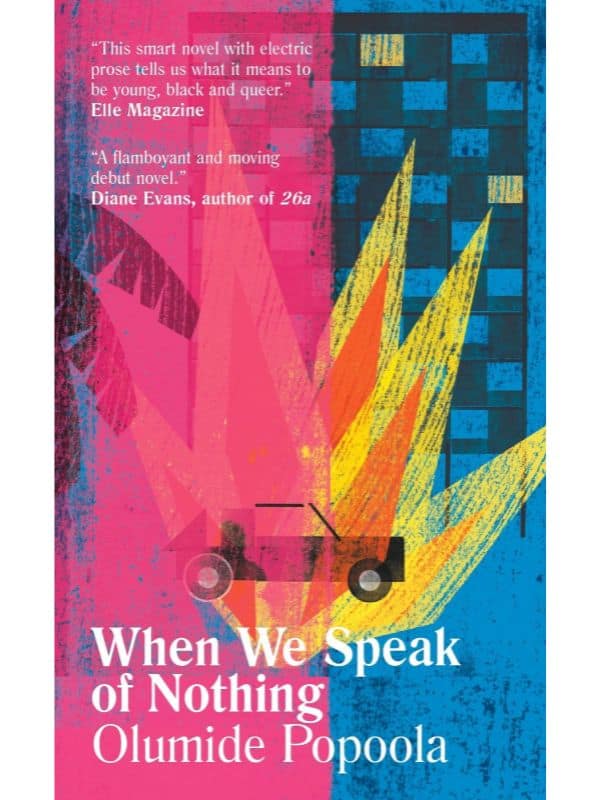
When We Speak of Nothing
₦10,000.00 – ₦12,000.00Price range: ₦10,000.00 through ₦12,000.00
When everything important remains unspoken, can friendship survive the silence?
Seventeen year old best friends Karl and Abu are inseparable. But when Karl travels from London to Port Harcourt in search of his estranged father, Abu is left behind as racial tension erupts into the 2011 England riots.
When We Speak of Nothing by Olumide Popoola is an urgent and original story about Black queer identity, friendship, family and the courage to become fully yourself.
Written with the energy and rhythm of grime music, this unforgettable coming of age novel is perfect for readers who want bold characters, inventive language and fiction that refuses to stay silent.
When We Speak of Nothing: A Powerful Story of Friendship and Identity
When everything important remains unspoken, can friendship survive the silence?
Karl and Abu are seventeen year old best friends growing up near King’s Cross in London.
They understand each other in ways that other people do not. Yet both are carrying feelings and fears they have not learned how to express.
When We Speak of Nothing by Olumide Popoola is a bold coming of age novel about friendship, Black queer identity, family and belonging.
Set between London and Port Harcourt during the unrest of 2011, it follows two teenagers approaching personal and political turning points.
Two Best Friends at a Crossroads
Karl and Abu are closer than brothers. Their friendship gives them a sense of safety in a world that frequently misunderstands young Black men.
Abu is fascinated by his classmate Nalini but cannot find the courage to tell her how he feels.
Karl is facing deeper questions about identity, his body and the parts of himself that remain difficult to share.
Their familiar world changes when Karl discovers that the father he believed was dead is alive in Nigeria.
Karl travels to Port Harcourt in search of answers. Abu remains in London as frustration and racial tension move towards an explosive confrontation.
The distance between them tests everything their friendship has held together.
From London to Port Harcourt
When We Speak of Nothing moves between two cities connected by migration, family history and unresolved questions.
London is filled with the energy of youth, friendship and music. It is also shaped by racism, economic inequality and suspicion towards young Black people.
Port Harcourt offers Karl the possibility of connection with his Nigerian family. However, the city presents new expectations about gender, culture and belonging.
Karl arrives hoping to understand his father. Instead, the journey forces him to examine what home means and whether family recognition can ever be unconditional.
The contrast between both cities reveals how identity can change depending on who is looking and what they expect to see.
Black Queer Identity and the Courage to Be Seen
At the centre of the novel is Karl’s struggle to live honestly.
Karl’s experience of gender and queer identity is deeply personal. It is also shaped by family, race, friendship and the cultural expectations surrounding him.
Olumide Popoola presents identity as something more complex than a category imposed from outside.
The novel explores the difference between knowing yourself and finding the words to help others understand who you are.
When We Speak of Nothing gives space to vulnerability without reducing Karl to suffering.
Karl is funny, observant, uncertain and determined. His identity is important, but it is not the only thing that makes him a compelling character.
A Tender Portrait of Black Male Friendship
The bond between Karl and Abu gives the story its emotional heart.
Their friendship contains loyalty, teasing, tenderness and the confidence that each will be there when the other is in trouble.
Yet even close friends can struggle to communicate. Silence begins to grow around the things Karl and Abu fear saying aloud.
The novel asks whether love can be fully expressed when language fails or when people believe the truth could push someone away.
This portrait of friendship challenges stereotypes that deny emotional intimacy and vulnerability to young Black men.
In When We Speak of Nothing, tenderness is not weakness. It becomes a source of courage and survival.
The 2011 England Riots
Abu’s story unfolds against the unrest that spread across England in August 2011.
The riots followed the police shooting of Mark Duggan in Tottenham and developed within a wider climate of distrust, inequality and racial tension.
As violence moves across London, Abu becomes caught in events larger than himself.
The public crisis reflects the private pressure building between the two friends. Misunderstanding and unspoken fear place both relationships and lives at risk.
The riots are not simply a dramatic background. They connect the characters’ personal experiences to larger questions about race, policing and belonging in Britain.
Language with the Energy of Grime Music
The novel’s language is one of its most distinctive features.
Olumide Popoola combines stream of consciousness narration, London slang, rhythm and wordplay to create prose that feels spoken as well as written.
Words move quickly across the page. Voices overlap, meanings shift and misunderstandings become part of the form of the story.
Cassava Republic describes the novel as what grime music might become if transformed into fiction.
This energetic style gives When We Speak of Nothing a voice that feels youthful, immediate and unlike conventional literary fiction.
Esu and the Crossroads of Communication
The narrating spirit of the novel is Esu, the Yoruba figure associated with language, messages, possibility and the crossroads.
Esu is a fitting presence in a story shaped by things said, misunderstood or left unspoken.
Karl and Abu repeatedly find themselves at crossroads. Every choice opens one future while closing another.
The presence of Esu also connects the novel’s experimental form to Yoruba thought and African storytelling traditions.
This layer gives the story additional meaning without interrupting its youthful pace.
Family, Home and Belonging
Karl’s journey to Nigeria begins with a desire to meet his father, but it becomes a wider search for belonging.
Family can offer recognition and connection. It can also create expectations that leave little room for an individual’s truth.
The novel asks whether home is determined by blood, birthplace or the people who make it possible to be yourself.
Abu faces a different kind of isolation in London. Without Karl beside him, familiar streets become increasingly dangerous.
Through both friends, When We Speak of Nothing explores how belonging can be found, lost and rebuilt.
Why You Should Read When We Speak of Nothing
- It presents a powerful Black queer coming of age story.
- It explores an emotionally rich friendship between two teenagers.
- It moves between London and Port Harcourt.
- It connects personal identity with race, migration and family.
- It is set against the 2011 England riots.
- It uses inventive prose influenced by slang and grime music.
- It incorporates Esu and Yoruba ideas about language and crossroads.
- It centres voices rarely given enough space in literary fiction.
Who Will Enjoy This Novel?
When We Speak of Nothing is ideal for readers of Black British fiction, queer African literature and contemporary coming of age novels.
It will appeal to readers interested in friendship, gender identity, racism, migration and the experiences of young Black people in Britain.
The novel is also suitable for book clubs and courses exploring queer literature, diaspora writing, youth culture and experimental fiction.
Readers who appreciate character driven stories and inventive language will find Karl and Abu difficult to forget.
About Olumide Popoola
Olumide Popoola is a Nigerian German writer, speaker and creative writing lecturer based in London.
Her writing explores queerness, migration, identity, language and the communities people create for themselves.
Readers can continue exploring her work with Like Water Like Sea, an intimate novel about friendship, grief, desire and becoming whole.
Discover more groundbreaking titles through Cassava Republic’s African and Black Queer Voices collection.
Read More About the Novel
Explore the book’s style, characters and themes in the Johannesburg Review of Books review.
The review examines how the novel uses the voices of London, Port Harcourt and Lagos to tell a story about identity and communication.
Order When We Speak of Nothing Today
When We Speak of Nothing is an urgent story about two friends searching for the words that might save them from silence.
Inventive, tender and alive with the rhythm of contemporary London, it captures the courage required to become fully visible.
Order your copy today and experience Karl and Abu’s unforgettable journey through friendship, identity and belonging.
| Weight | 0.5 kg |
|---|---|
| Dimensions | 60.0 × 0.4 × 6.0 cm |
| ISBN-10 | 978-9785517712 |
| Book Author | |
| Book Type | Paperback, EPUB, PDF, Kindle |
| year_publication | 2018 |
| Pages | 256 |
Reviews
There are no reviews yet.