
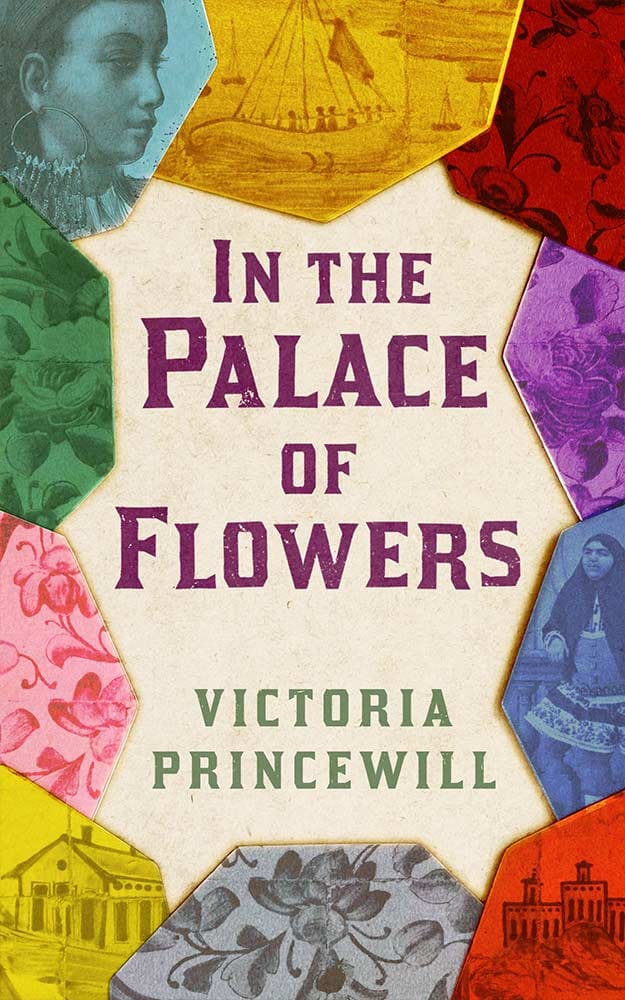
In The Palace of Flowers
£10.99 – £11.99Price range: £10.99 through £11.99
In a palace overflowing with beauty, two enslaved people must risk everything to keep their names from being erased.
In the Palace of Flowers by Victoria Princewill follows Jamila and Abimelech, two Abyssinians trapped within the dangerous splendour of Iran’s Qajar royal court.
As rebellion grows beyond the palace walls, ambition, desire and betrayal threaten everyone inside them. Jamila and Abimelech must decide how much they will sacrifice for meaning, dignity and the chance to shape their own destinies.
Inspired by a rare historical account, this atmospheric novel is perfect for readers who love Persian historical fiction, palace intrigue and powerful stories about forgotten Black lives.
In the Palace of Flowers: A Powerful Story of Survival and Defiance
In a royal palace filled with beauty, secrets and betrayal, two enslaved people are determined not to disappear from history.
In the Palace of Flowers by Victoria Princewill transports readers to Iran during the final years of the nineteenth century.
Behind the magnificent walls of the Qajar royal court, Jamila and Abimelech live at the mercy of people who possess wealth, influence and the power to determine their futures.
Jamila is an enslaved Abyssinian woman haunted by the possibility of being forgotten. Abimelech is a fellow Abyssinian and a eunuch whose intelligence brings him dangerously close to the centre of political power.
Both want their lives to have meaning. Yet in a court governed by rank, desire and suspicion, even the wish to be remembered can become dangerous.
Enter the Dangerous World of the Qajar Court
The royal court is outwardly magnificent. Its rooms overflow with luxury, ceremony and carefully displayed power.
Beneath that beauty lies a world of competition. Princes, wives, advisers, servants and foreign representatives all struggle to protect their positions.
The Shah is growing older, but the future of his dynasty remains uncertain. His possible successors are divided by rivalry, personal weakness and competing ambitions.
Beyond the palace, ordinary people are increasingly dissatisfied. Economic hardship and public anger threaten the stability of the monarchy.
Britain and Russia also compete for influence in Iran. Their interference adds another layer of danger to an already divided court.
In this unstable world, a conversation can change an alliance. A private desire can become a political weapon. A trusted companion can become a betrayer.
Two Lives History Almost Forgot
In the Palace of Flowers centres people who are frequently missing from popular accounts of Persian history.
Jamila and Abimelech are enslaved, but the novel never reduces them to their captivity. They possess intelligence, desire, humour, fear and ambition.
Jamila longs to leave evidence that she existed. She does not want her experiences to vanish simply because powerful people consider her life unimportant.
Abimelech understands how information moves through the palace. His unusual access to political conversations brings opportunity, but it also attracts suspicion.
Their friendship offers understanding in a place where trust is scarce. However, each must decide how far that loyalty can survive when their personal needs begin to differ.
Inspired by the Account of Jamīla Habashī
Victoria Princewill drew inspiration from the surviving first-person account of Jamīla Habashī, an Abyssinian woman enslaved in Iran.
That brief historical record confirms Jamīla’s identity and traces aspects of her enslavement. It also reveals how little information remains about women like her.
In the Palace of Flowers imaginatively restores emotional depth to a life that history recorded only in fragments.
The novel considers what Jamila might have witnessed, feared and desired while living within the Persian royal court.
This foundation gives the story considerable emotional force. Jamila’s fear of being forgotten reflects the wider disappearance of enslaved Black people from familiar versions of Iranian history.
A Story of Slavery Beyond Familiar Narratives
Many readers encounter the history of African enslavement primarily through accounts of the Atlantic slave trade.
This novel illuminates another neglected history: the movement and enslavement of East African people within Iran and the wider Persian Gulf region.
People taken from Abyssinia and other parts of Africa served in royal households, military environments and wealthy private homes.
Their proximity to powerful people did not make them free. Access to luxury could exist alongside coercion, exploitation and the constant threat of violence.
By exploring this contradiction, Victoria Princewill presents a complex examination of power. The palace may appear beautiful, but its splendour depends upon deep inequality.
Love, Friendship and Political Intrigue
This Iranian historical fiction novel combines intimate relationships with a larger struggle over the country’s future.
Love can provide comfort, but it can also create vulnerability. Friendship can offer protection, yet divided loyalties can turn affection into danger.
Sex, jealousy and ambition shape relationships throughout the court. Private choices frequently produce public consequences.
Jamila and Abimelech must navigate the expectations of princes, members of the harem and political advisers.
The closer they move towards influence, the more they risk becoming trapped in conflicts they cannot control.
This tension gives In the Palace of Flowers the momentum of a political drama while preserving the emotional intimacy of a character-driven novel.
A Palace Divided by Foreign Influence
The story unfolds during a precarious period in Iranian history.
Public dissent is growing, the monarchy faces criticism and foreign powers seek greater control over the country’s affairs.
Britain and Russia view Iran as strategically valuable. Their competing interests influence decisions made within the royal court.
These international pressures form part of the political environment surrounding Jamila and Abimelech.
Although neither possesses an official title, both are drawn into conversations and relationships connected to the future of the dynasty.
Their position allows readers to see power from below: close enough to observe its secrets, but never secure enough to escape its consequences.
Why Readers Will Love In the Palace of Flowers
- An atmospheric journey into nineteenth-century Qajar Iran
- Two memorable Abyssinian characters fighting against erasure
- A story inspired by the historical Jamīla Habashī
- Royal rivalry, forbidden desire and political betrayal
- A rarely explored history of African enslavement in Iran
- Complex relationships shaped by power and survival
- Rich historical detail without losing emotional intimacy
- A compelling examination of memory, freedom and belonging
Who Should Read This Novel?
In the Palace of Flowers is ideal for readers of African historical fiction, Iranian historical fiction and novels about overlooked women.
It will appeal to anyone fascinated by palace intrigue, royal dynasties, political upheaval and relationships complicated by unequal power.
The novel is also suitable for readers interested in Black history beyond the Atlantic world.
Book clubs will find rich opportunities to discuss slavery, memory, historical erasure, friendship, sexuality and the difference between access to power and genuine freedom.
About Victoria Princewill
Victoria Princewill is a British writer of Nigerian heritage. In the Palace of Flowers is her debut novel.
Her writing brings together historical research and vivid storytelling to examine race, identity, power and the lives excluded from conventional historical narratives.
Readers can discover more about the inspiration behind the novel in this interview with Victoria Princewill.
Explore more captivating titles in Cassava Republic Press’s historical fiction collection.
Order In the Palace of Flowers Today
In the Palace of Flowers is a sweeping story of two people refusing to let captivity define the limits of their humanity.
It asks who is permitted to enter history, whose experiences are preserved and what a person might risk to ensure that her name survives.
Order your copy today and enter a beautiful but treacherous royal court where love, ambition and survival are never far apart.
| Weight | 0.5 kg |
|---|---|
| Dimensions | 60.0 × 0.4 × 6.0 cm |
| ISBN-10 | 9781911115755 |
| Book Author | |
| Book Type | Paperback, EPUB, PDF, Kindle |
| Pages | 320 |
| year_publication | 2021 |
Anonymous –
“A book that is both decadent and intimate, In The Palace of Flowers opened up a part of history I knew nothing about and will stay with me for a very long time.”
– Ayesha Harruna Attah, author of The Hundred Wells of Salaga
shopmanager –
“With captivating storytelling skills and impressive historical knowledge, Victoria Princewill has written an awe-inspiring, dynamic and powerful novel about a part of African history that few other writers have told. In giving voice to Jamila Habashi, whose first person account is the only existing account of an Abyssinian slave in 19th c Iran, In The Palace of Flowers is both restorative and illuminating while gripping the reader’s mind with vivid and seductive language.”
– Minna Salami, author of Sensuous Knowledge: A Black Feminist Approach for Everyone