
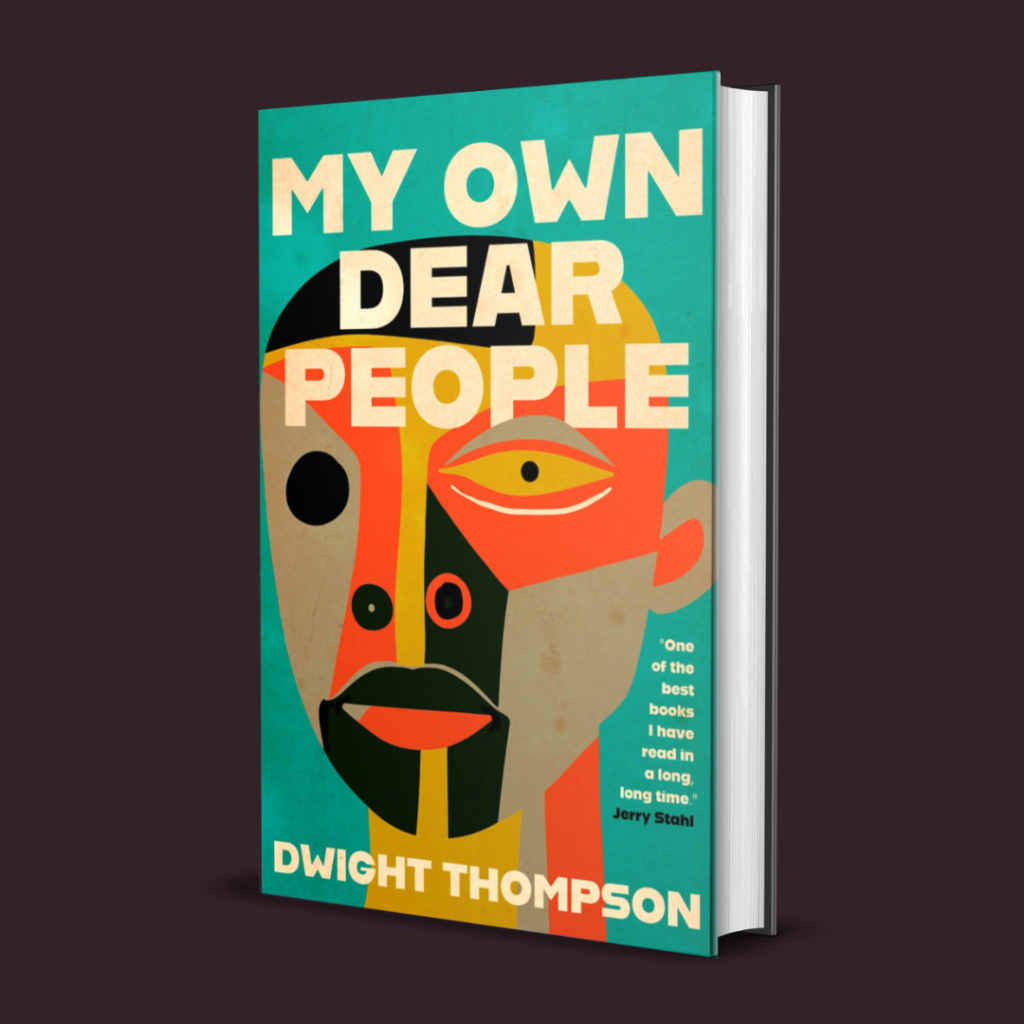
Author of My Own Dear People, Dwight Thompson invites us into the heart of his creative process, pulling back the curtain on the moments and stories that inspired the novel. From personal experiences to unexpected encounters, he reflects on the real-life sparks that shaped the narrative and brought his story to life.
If I must point to one incident that was the catalyst for My Own Dear People, it would be something that happened in high school. A boy I knew made a statement that has stayed with me ever since.
Let’s call the boy, David. He sat beside me in class. He was so stupid, I thought. At lunchtime the boys would pin him to the wall and take his money. Or they would give him ten dollars, a paltry sum, and tell him to buy them box lunches and fruit juice—the expensive one in the one litre bottle—and bring back change. And the idiot would do it, and bring back change. We weren’t friends but I pretended to like him, so he let me play with his Game Boy.
One day while he and I were walking the grade nine block, I dragged my stencil knife along the wall that had been painted over the weekend. Immediately the new coat peeled off revealing the ugly, dull coat below. I wondered how many old coats lay beneath. Soon this coat would get unsightly and they would have to paint the wall again. The whole school building was like an ugly old monster playing dress-up, who had to get new clothes every term to look respectable. The thought made me laugh. I mentioned it to David when I noticed he got serious looking at the wall. He said, and I remember it to this day, he said, “We all playin’ dress-up, but we have a double somewhere naked an’ scared an’ catchin’ hell.”
The P.E period was after lunch that day. Boys had filed out of class but I spun around and ran back to my desk, forgetting something. Our form teacher sat at her desk with the long pink attendance book, glad for the peace and quiet. David’s blue bag lay propped against the back of his chair, left open and his video game was there, in its ‘lite silicone’ case. Begging for someone to steal it. I zipped up his bag, remembering the only reason he brought it to school so much was to bribe boys to be his friends since most of them suspected he was gay and avoided him or beat him up.
‘Miss’ saw what I did and smiled. I remembered David’s statement and thought: Where was her naked double, since she was here? That year alone, as a new attractive hire fresh out of college, had been horrible for her at the boys’ school, with two separate groping incidents from students that had escalated to the administration.
When I went home I wondered if David hadn’t left his video game exposed on purpose so it could be stolen, as some sort of peace offering to the bullies, who were part and parcel of the monstrous school with its peeling walls, an institution that needed a lot more than a new paint job, a ‘beacon’ of the second city that couldn’t protect its women and children. Had I harmed him more than I’d assisted him? I knew his fight was just beginning, and he ended up becoming a career criminal banding with other gay men who became a terror in Montego Bay.
So when I sat down to write the novel, all these incidents and questions coalesced into a story that sought to showcase vulnerable groups and probe the struggles of their ‘doubles’, in extremis—vis-à-vis Maude Dallmeyer’s rape and the damage to Nyjah Messado’s psyche, like peeling paint, as a do-nothing witness—doubles that have no protection.
Order your copy of My Own Dear People and dive into this powerful story
