
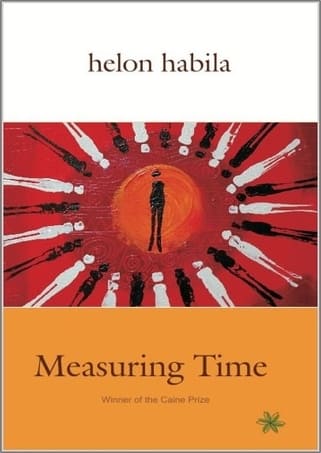
Measuring Time
₦12,000.00
Twin brothers dream of escaping their village. One leaves to fight wars across Africa. The other stays behind to rewrite the history of home.
Mamo and LaMamo begin life together, but illness separates their paths.
While LaMamo becomes a soldier in Libya and Liberia, Mamo remains in Northern Nigeria, where he confronts family secrets, political ambition and an unexpected chance at love.
Measuring Time by Helon Habila is an award winning Nigerian family saga about two brothers searching for significance in a world transformed by history.
Measuring Time by Helon Habila
Twin brothers dream of escaping their village. One leaves to fight wars across Africa. The other stays behind to discover that history can be another kind of battlefield.
Mamo and LaMamo are twin brothers born in a small village in Northern Nigeria.
Their mother dies while bringing them into the world.
They grow up under the authority of Lamang, their domineering and unfaithful father.
Both brothers dream of escaping the limitations of village life.
They plan to run away and become soldiers, but illness forces Mamo to remain behind.
LaMamo leaves alone, beginning a journey through rebellion, war and political disappointment.
Measuring Time by Helon Habila is an epic Nigerian family saga about ambition, history, love and the different ways people try to make their lives matter.
Two Brothers and Two Powerful Journeys
Mamo and LaMamo begin life together but gradually move in opposite directions.
LaMamo searches for significance through travel, military adventure and revolution.
Mamo remains in the village and searches for meaning through books, local history and personal relationships.
Distance separates them, but the connection between the brothers remains.
LaMamo occasionally sends letters describing the places he has travelled and the conflicts he has joined.
These letters allow Mamo to imagine a world beyond the village.
They also reveal the increasing gap between heroic dreams and the brutal reality of war.
Through the brothers, Measuring Time asks whether significance comes from travelling far away or understanding the place where one already belongs.
Mamo: The Brother Who Stays Behind
Mamo’s illness prevents him from following LaMamo.
At first, remaining in the village feels like failure.
He watches other people pursue careers, relationships and political ambitions while his health restricts his choices.
Gradually, Mamo discovers another path.
His interest in history leads him to study the people, traditions and political structures of the village.
He begins recording the lives of individuals who might otherwise disappear from public memory.
His work transforms him from a young man waiting for life to begin into someone capable of shaping how the past will be remembered.
LaMamo: The Brother Who Goes to War
LaMamo escapes the village and joins a rebel group near the border with Chad.
He later trains in Libya and becomes involved in armed conflicts across West Africa.
His journey eventually takes him to Liberia, where he fights alongside Charles Taylor’s rebels.
LaMamo originally imagines soldiering as a path towards adventure and heroism.
War soon exposes him to violence, suffering and political manipulation.
The causes he serves become harder to believe in.
He must confront the difference between revolutionary language and the reality experienced by civilians and soldiers.
Measuring Time presents war through one young man’s growing disillusionment rather than celebrating military adventure.
Writing the History of Keti
Mamo is recruited by the Mai, the village’s traditional ruler.
The Mai wants him to write a history that supports the ruling family’s preferred version of the past.
Mamo soon discovers that official history is rarely neutral.
Powerful people want their achievements remembered while their failures remain hidden.
Families protect legends that may not survive careful investigation.
Mamo must decide whether he will produce flattering propaganda or write a more honest account.
His research reveals connections between colonialism, missionary activity, traditional authority and modern politics.
In Measuring Time, writing history becomes an act of courage and responsibility.
Family, Power and Political Ambition
Lamang, the twins’ father, is ambitious and deeply concerned with his public image.
He pursues political office and uses relationships to expand his influence.
His choices affect his sons and the women around him.
His behaviour also reflects a political culture in which personal ambition can become more important than public service.
The conflicts within the family mirror larger struggles taking place in Nigeria.
Private betrayal, public corruption and historical manipulation are shown as connected forms of power.
The novel does not separate national politics from domestic life.
It demonstrates how political decisions enter families, villages and individual dreams.
Love and Loss in Measuring Time
Mamo’s relationship with Zara brings tenderness and possibility into his life.
Zara is thoughtful, independent and unwilling to surrender her identity to social expectations.
Their connection gives Mamo a vision of life beyond illness and historical research.
However, love does not remove the pressures surrounding them.
Timing, personal ambition and uncertainty complicate their relationship.
Mamo must learn that love cannot always be preserved simply because it is genuine.
Their story gives Measuring Time an emotional centre within its larger historical and political narrative.
Northern Nigerian Village Life
The village is populated by memorable characters whose lives intersect with the twins.
Aunt Mariana brings religious devotion and strength to the family.
There are missionaries, political figures, relatives, storytellers and individuals dismissed as eccentric by the community.
Each character adds another layer to the village’s history.
Tradition, Christianity, colonial influence and modern political ambition exist beside one another.
These forces sometimes cooperate and frequently collide.
The village is therefore more than a background.
It becomes a living archive of Nigerian history and social change.
Colonial History and the Stories Nations Tell
The history Mamo uncovers stretches beyond his own family.
It includes missionary activity, colonial intervention and the changing authority of traditional rulers.
Stories accepted as fact are questioned.
Forgotten individuals return to the historical record.
The novel examines who has the authority to decide what becomes history.
It also considers how communities use stories to protect their identity.
Measuring Time suggests that understanding the present requires an honest confrontation with the past.
What Does It Mean to Measure a Life?
The title refers to more than the passage of years.
Every major character is trying to determine whether his or her life has value.
LaMamo measures himself through distance, danger and political causes.
Lamang measures success through money, influence and public recognition.
Mamo initially believes that illness has reduced the possibilities available to him.
He gradually learns that a meaningful life does not have to be measured through fame or physical strength.
Memory, love and the preservation of truth can also give a life significance.
An Award Winning African Novel
Measuring Time won the 2008 Virginia Library Foundation Prize for Fiction.
It was also nominated for the Hurston Wright Legacy Award and the International Dublin Literary Award.
The recognition reflects the novel’s ability to connect an intimate family story with major questions about African history.
Readers can learn more about the book and its international recognition through the official Dublin Literary Award page.
Why Read Measuring Time?
- An unforgettable story about twin brothers
- A sweeping portrait of Northern Nigerian village life
- A family saga connected to modern African history
- Powerful themes of ambition, identity and belonging
- An honest portrayal of war and political disillusionment
- A moving love story between Mamo and Zara
- A thoughtful examination of colonial history
- Memorable characters with conflicting ambitions
- A winner of the Virginia Library Foundation Prize
- An excellent choice for book clubs and university courses
Who Will Enjoy This Novel?
Measuring Time will appeal to readers of African literary fiction, historical novels and multigenerational family sagas.
It is ideal for readers interested in Nigerian politics, colonial history and traditional leadership.
Readers who enjoy stories about siblings taking different paths will appreciate the contrast between Mamo and LaMamo.
The novel is also suitable for book clubs discussing ambition, masculinity, war, love and the meaning of success.
Explore More Nigerian Fiction
Discover Helon Habila’s acclaimed debut novel, Waiting for an Angel, about journalism and resistance under military dictatorship.
Readers interested in Northern Nigerian life and political extremism may also enjoy Born on a Tuesday by Elnathan John.
Explore the historical forces behind modern Nigeria in Formation: The Making of Nigeria from Jihad to Amalgamation.
About Helon Habila
Helon Habila is a Nigerian novelist, poet and professor of creative writing.
He was born in Kaltungo, Gombe State, and studied at the University of Jos and the University of East Anglia.
His books include Waiting for an Angel, Oil on Water and The Chibok Girls.
His writing explores political power, memory, environmental injustice and the lives of ordinary Nigerians.
Order Measuring Time Today
Measuring Time is an expansive yet intimate story about two brothers searching for purpose.
One brother travels across borders and battlefields.
The other discovers that staying home can demand an equally powerful form of courage.
Order Measuring Time today and experience an unforgettable Nigerian epic about family, history, love and the desire to leave a meaningful life behind.
| Weight | 1.5 kg |
|---|---|
| Dimensions | 3 × 6 × 6.0 cm |
| ISBN-10 | 9789780805135 |
| Book Author | |
| Book Type | |
| year_publication | 2007 |
| Pages | 324 |
Reviews
There are no reviews yet.