The World Was in Our Hands
£15.99 – £16.99Price range: £15.99 through £16.99
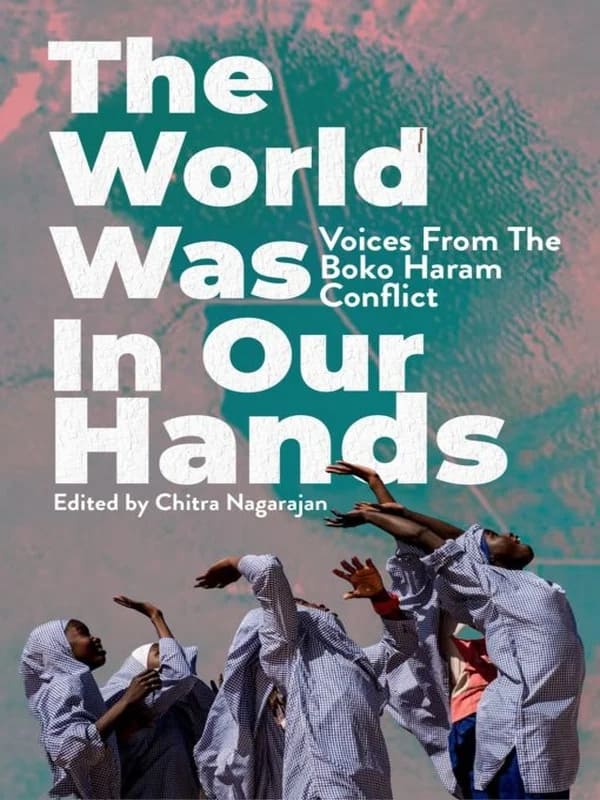
The World Was in Our Hands: Voices from the Boko Haram Conflict, edited by Chitra Nagarajan, brings together moving first hand accounts from people affected by one of Nigeria’s most devastating conflicts.
Through the voices of abducted girls, soldiers, community leaders, fishermen and displaced residents, this powerful work of African nonfiction reveals experiences that are often overlooked in news reports. It examines violence and survival alongside patriarchy, corruption, economic hardship and climate change in northeast Nigeria.
The World Was in Our Hands
Behind every report of war are people whose experiences cannot be captured by headlines, statistics or political arguments.
The World Was in Our Hands: Voices from the Boko Haram Conflict brings those experiences to the centre of the story. Edited by Chitra Nagarajan, this moving collection presents first hand accounts from people living through violence, displacement and uncertainty in northeast Nigeria.
Their testimonies reveal the devastating consequences of conflict, but they also show courage, resilience and the determination to rebuild families and communities.
Voices beyond the headlines
Public discussions of Boko Haram often concentrate on military operations, armed groups and major events such as the Chibok schoolgirl abductions. This book offers a broader and more personal perspective.
Abducted girls, soldiers, community leaders, fishermen and other residents describe their experiences in their own voices. Their accounts reveal fear, grief and difficult choices, while challenging the simple labels often attached to survivors and conflict affected communities.
By allowing people to tell their own stories, the collection offers readers a deeper understanding of the human reality behind the Boko Haram conflict.
Understanding the roots of conflict
Violence does not develop in isolation. Nagarajan’s work examines the social, economic and political conditions that have shaped insecurity in northeast Nigeria.
The testimonies explore how patriarchy affects women and girls, how corruption weakens public trust and how economic hardship leaves communities more vulnerable. They also reveal connections between climate change, inequality, displacement and competition for increasingly limited resources.
These perspectives create a more complete picture of the crisis than conventional news coverage usually provides.
A vital record of contemporary Nigerian history
More than a book about Boko Haram, this is an important cultural and historical archive.
It preserves the memories of people whose lives might otherwise be forgotten, simplified or narrated by outsiders. Each account contributes another layer to the history of northeast Nigeria and helps readers understand how ordinary people experience war and its lasting effects.
This carefully assembled work will appeal to readers interested in African history, Nigerian politics, human rights, peace building, gender justice and contemporary African nonfiction.
Why this book matters
The World Was in Our Hands is essential reading for anyone who wants to understand the conflict through the voices of those most affected by it.
Readers will discover:
• Personal accounts that look beyond political and military narratives
• Experiences of women, girls and displaced communities
• Connections between insecurity, corruption and economic hardship
• The influence of patriarchy on life during conflict
• The relationship between climate pressures and instability
• Powerful examples of courage, survival and community resilience
Students, researchers, journalists, policymakers and general readers will find this an accessible and deeply human introduction to the conflict and its consequences.
Listen to Chitra Nagarajan discuss the book and its wider significance in this New Books Network interview.
You can also explore more works on African history, politics and society in Cassava Republic’s nonfiction collection.
About Chitra Nagarajan
Chitra Nagarajan is an activist, researcher and writer whose work focuses on conflict analysis, civilian protection, human rights and peace building, particularly in West Africa.
She has spent many years examining how conflict affects individuals and communities. Her work also engages with feminist, antiracist, antifundamentalist and queer movements.
Nagarajan is a coeditor of She Called Me Woman: Nigeria’s Queer Women Speak. In this collection, she combines careful research with sensitive storytelling to preserve experiences that deserve to be heard.
Order your copy today and discover a powerful human account of survival, responsibility and life during the Boko Haram conflict.
| Weight | 0.5 kg |
|---|---|
| ISBN 13 | 9781913175566 |
| Edited By | Chitra Nagarajan |
| format | |
| Pages | 272 |
| year_publication | 2025 |
Reviews
There are no reviews yet.