
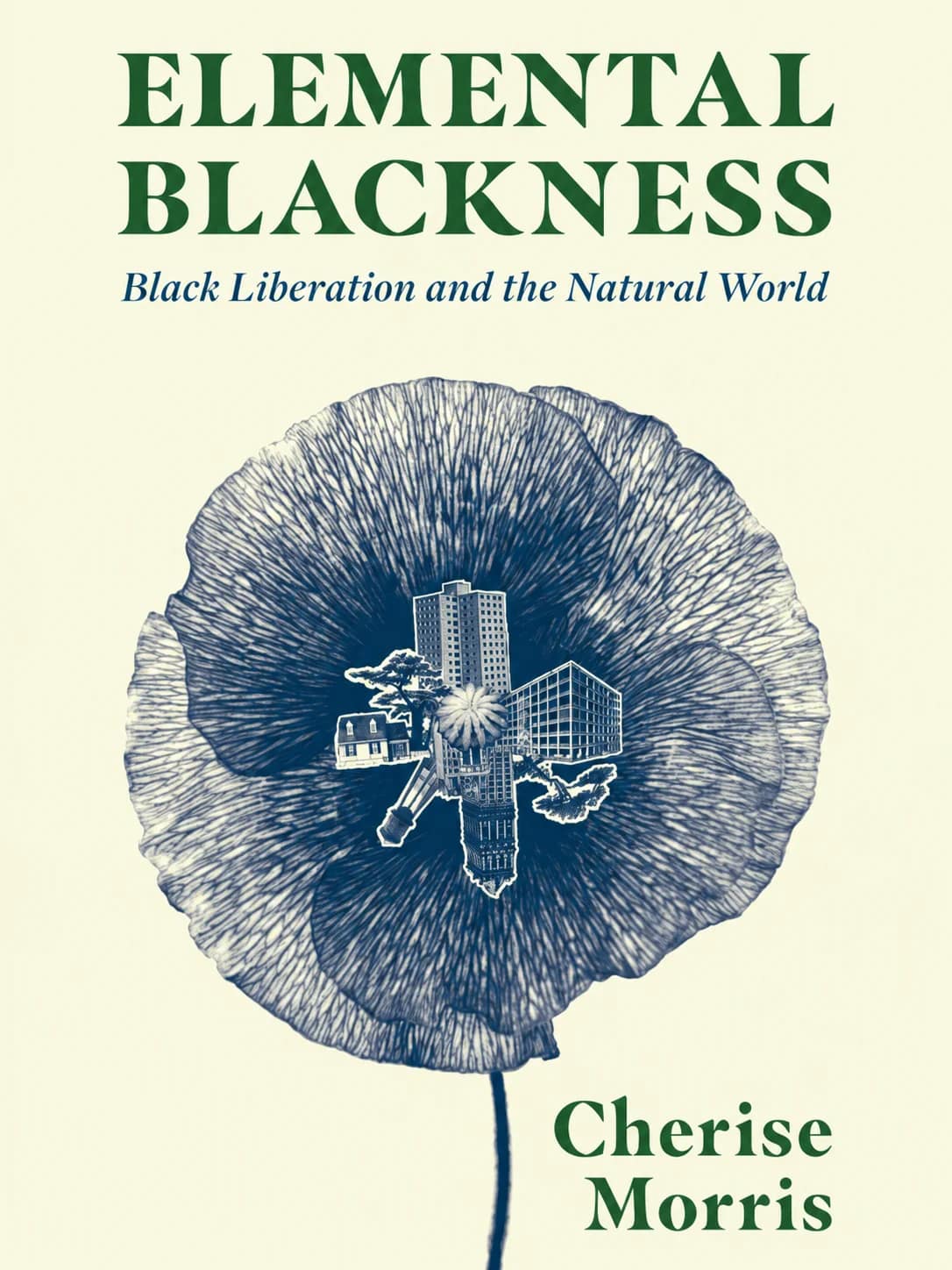
Elemental Blackness
£16.99
Written in a bold, experimental form, Elemental Blackness interweaves poetry, ritual, essays and prayers to paint a rich portrait of Blackness in all its multifaceted complexity. Centering on the four elements of water, fire, earth and air, Elemental Blackness shows us how Blackness, the environment and even Morris herself have been shaped and shifted by structures of white supremacy. From the trauma of the Middle Passage, to the grief of George Floyd, and from slave uprisings to the Flint water crisis, Morris’ eclectic and electrifying prose takes us on a whirlwind tour of what it means to be Black in America, alongside intimate recollections of her own life, from coming of age as a young girl in the country, to finding a new home in Detroit.
Available on backorder
Elemental Blackness: 4 Powerful Paths to Liberation
What if water remembers, fire carries grief, earth holds our ancestors and air teaches us how to become free?
In Elemental Blackness, Cherise Morris turns to the four elements to explore Black identity, ancestry, liberation and humanity’s relationship with the natural world.
This is not a conventional essay collection or memoir.
Morris combines poetry, personal reflection, cultural criticism, ritual and prayer to create a bold portrait of Blackness in all its complexity.
Her writing moves between the intimate and the historical.
She considers her own life alongside the Middle Passage, slave uprisings, the murder of George Floyd and the Flint water crisis.
The result is a powerful meditation on what Black people have survived, what the natural world remembers and how liberation might be imagined.
Black Liberation and the Natural World
Nature is not merely a background in Elemental Blackness.
Water, fire, earth and air become guides through histories of displacement, resistance, grief and transformation.
Each element carries different meanings.
Water can represent life, memory and the forced journeys of the African diaspora.
Fire holds destruction, rage, purification and the possibility of renewal.
Earth preserves ancestry, family history and relationships with land.
Air evokes breath, spirit and the freedom required to imagine a different future.
By placing Black liberation beside the natural world, Morris reveals how race, history and environmental injustice remain deeply connected.
Four Elements, Many Histories
The four elements give the book its structure, but they do not restrict its imagination.
Instead, they allow Morris to travel across time, place and literary form.
History enters memoir. Prayer meets political analysis. Poetry opens a path towards ritual and reflection.
This experimental approach gives Elemental Blackness an energy that cannot be contained within one genre.
The book asks readers to feel history as well as understand it.
It invites us to recognise that the past survives in bodies, communities, landscapes and inherited memories.
The elements connect personal experience to larger systems of oppression.
They also offer languages through which healing, resistance and collective transformation can be imagined.
From the Middle Passage to George Floyd
Morris confronts some of the most painful events shaping Black life in America.
The Middle Passage becomes part of a wider meditation on water, forced movement, memory and survival.
Slave uprisings reveal the courage of people who refused to accept captivity as their destiny.
The murder of George Floyd brings attention to breath, racial violence and the continuing vulnerability of Black life.
The Flint water crisis exposes how environmental injustice can be embedded within political decisions and public institutions.
These subjects are not treated as disconnected historical incidents.
In Elemental Blackness, they form part of a continuing struggle over land, resources, safety, dignity and the right to exist freely.
Blackness, Land and Ancestral Memory
Alongside public history, Morris writes intimately about her own relationship with home and land.
She reflects on growing up in rural Virginia and later creating a life in Detroit.
Her personal memories reveal how land can hold family history, generational loss and a powerful sense of belonging.
For Black families, relationships with land are often complicated by slavery, dispossession, migration and economic inequality.
Land may represent refuge and inheritance.
It may also carry histories of exploitation, displacement and grief.
Elemental Blackness asks what it means to belong to a place when history has repeatedly threatened that belonging.
It considers how ancestral memory can survive even when land, homes and physical inheritances are lost.
A Bold Blend of Essays, Poetry and Prayer
Cherise Morris moves freely between different forms of expression.
Readers will encounter essays, memoir, poetry, ritual, prayers and cultural criticism.
Each form offers a different way of approaching Black history and liberation.
Analytical writing helps reveal the political systems shaping Black life.
Poetry creates space for emotions that cannot always be captured through conventional explanation.
Prayer and ritual connect the political struggle for freedom with spiritual reflection and ancestral knowledge.
The shifting forms make Elemental Blackness especially appealing to readers who appreciate innovative and experimental nonfiction.
Rather than offering one fixed definition of Blackness, the book allows Black identity to remain expansive, changing and alive.
Environmental Justice Is Racial Justice
The natural environment does not affect every community equally.
Decisions about clean water, safe housing, land ownership and pollution are frequently shaped by political and economic power.
Black communities have often carried disproportionate environmental burdens.
The Flint water crisis provides a devastating example of what happens when public institutions fail to protect the people they are meant to serve.
However, Morris also looks beyond environmental harm.
She explores the knowledge, resilience and spiritual relationships Black communities have developed through their connections with nature.
Elemental Blackness presents environmental justice as part of a broader struggle for racial dignity, safety and collective freedom.
Healing Without Forgetting
This book does not treat healing as an instruction to forget suffering or move quickly beyond grief.
Healing begins with acknowledging what happened and recognising how the past continues to shape the present.
Morris creates space for anger, mourning, uncertainty and spiritual questioning.
She also makes space for pleasure, beauty, imagination and transformation.
The four elements become companions in this process.
They remind readers that destruction and renewal can exist together.
Through its mixture of history and intimate reflection, Elemental Blackness asks how people can honour their ancestors while creating freer futures for those still to come.
Why You Should Read Elemental Blackness
- It explores Black liberation through water, fire, earth and air.
- It combines essays, memoir, poetry, ritual and prayer.
- It connects Black history with environmental justice.
- It examines the Middle Passage, slave uprisings and racial violence.
- It considers George Floyd’s murder through questions of breath and humanity.
- It explores the Flint water crisis as an environmental justice issue.
- It reflects on ancestry, rural Virginia, land and belonging.
- It presents an intimate portrait of Black life and identity.
- It offers an innovative work of experimental nonfiction.
- It won the 2024 Global Black Women’s Nonfiction Manuscript Prize.
Who Is This Book For?
Elemental Blackness will appeal to readers interested in Black history, environmental justice, ancestry, spirituality and racial liberation.
It is an excellent choice for readers of Black feminist nonfiction, experimental essays and books about the relationship between people and the natural world.
The collection is also suitable for university courses and reading groups exploring Black studies, environmental humanities, gender studies and African American history.
Readers interested in creative nonfiction, poetry and spiritual writing will appreciate Morris’s fluid movement between different literary forms.
This is a particularly valuable book for anyone seeking writing that addresses historical pain without surrendering the possibility of healing and transformation.
Discover more bold writing in Cassava Republic Press’s African and Black nonfiction collection.
You can also explore more books centring Black women’s lives in the African and Black women’s stories collection.
About Cherise Morris
Cherise Morris is an award winning writer, interdisciplinary artist, ritualist and spiritual worker.
She was born and raised in rural Virginia and now lives in Detroit, Michigan.
Her writing has appeared in The Iowa Review, Longreads, Black Warrior Review, Truthout and other publications.
Her essays were recognised as notable works of literary nonfiction in The Best American Essays series in 2018 and 2019.
Her work has also been nominated for the Pushcart Prize.
Morris won the inaugural Global Black Women’s Nonfiction Manuscript Prize in 2024 for Elemental Blackness.
Learn more about her writing, performances and artistic practice on Cherise Morris’s official website.
Order Elemental Blackness Today
Elemental Blackness is an electrifying meditation on Black identity, history, nature and the continuing work of liberation.
Through water, fire, earth and air, Cherise Morris reveals the forces that have shaped Black life and the possibilities that remain for healing and transformation.
This is a book for anyone ready to encounter Blackness as history, spirit, memory, resistance and limitless creative possibility.
Order your copy today and discover a bold new vision of Black liberation rooted in ancestry, nature and collective transformation.
| Weight | 0.5 kg |
|---|---|
| ISBN | 9781913175924 |
| Author | Cherise Morris |
| Format | Hardback |
| Publication Date | 5th November 2026 |
Reviews
There are no reviews yet.